
On this page
If you're a real estate agent, you already know that social media matters. The National Association of Realtors reports that 82% of real estate businesses use social media for marketing. But here's what most agents get wrong: they treat it as a bulletin board for new listings, post irregularly, and then wonder why the phone isn't ringing.
The data tells a different story about what actually works. According to NAR's Technology Survey, 52% of agents rate leads from social media as higher quality than MLS leads. Forty-six percent call social media their single best source of high-quality leads. And 38% of new clients in a typical year came directly from a social platform.
The agents winning on social media aren't necessarily the ones with the biggest budgets or the most followers. They're the ones who've figured out that social media for real estate is about building trust over months, not blasting listings and hoping for instant transactions. Social leads typically take six to twelve months to convert into signed agreements—compared to one to three months for portal leads. The agents who understand this timeline and nurture accordingly are the ones who consistently fill their pipeline.
This guide breaks down exactly how small agencies and independent agents can use social media (with a little help from AI) to get more listings, build a recognizable local brand, and stop depending on referral luck.
Why Most Real Estate Social Media Fails
Walk through any small agency's Facebook page and you'll see the same pattern: a stream of "Just Listed!" posts with professional photos, maybe an open house announcement, and then radio silence for two weeks. This approach attracts buyers who screenshot your listing and send it to their own agent—it does almost nothing to win you listings.
The fundamental mistake is treating social media as a distribution channel for inventory rather than a relationship-building tool. Sellers don't choose agents because they post a lot of listings. They choose agents who demonstrate local expertise, market knowledge, and a personality they can trust with the biggest financial transaction of their lives.
Research from real estate marketing platform Funnl found that the most successful agents follow what's called the 70/30 rule: seventy percent of their content is educational, personality-driven, and community-focused, while only thirty percent is direct listing promotion. This ratio works because it positions you as a local authority, not a listing aggregator.
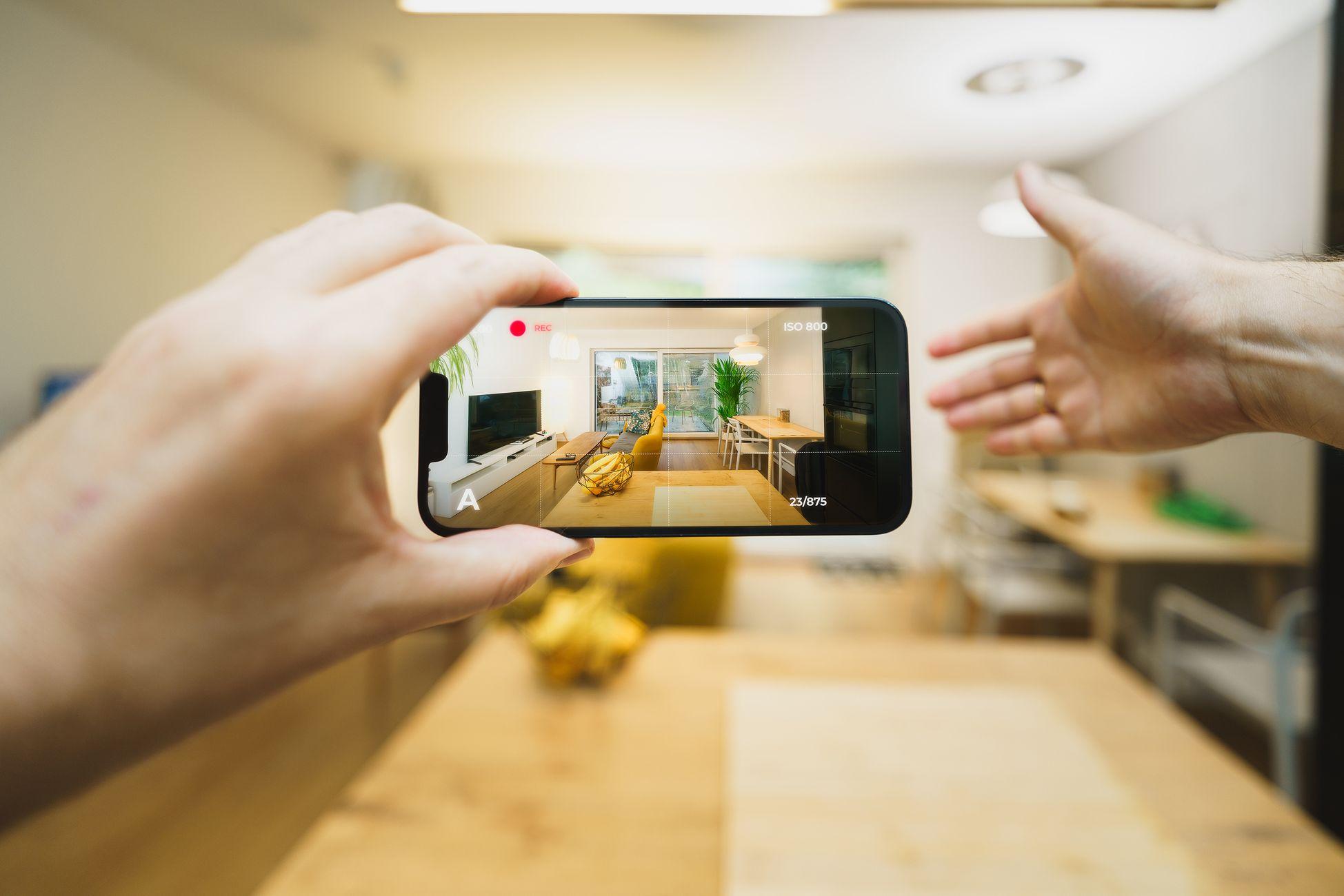
The agents who get this right also understand that consistency beats production value. Daily smartphone videos outperform monthly professional shoots. Properties marketed with video receive 403% more inquiries than photo-only listings, regardless of whether that video was produced by a cinematographer or shot on an iPhone in ten minutes.

The Platforms That Actually Matter for Real Estate
You don't need to be everywhere. In fact, trying to maintain five social media accounts as a solo agent or small team is a recipe for burnout and mediocre content everywhere. Here's what the data says about each platform, so you can make an informed choice about where to focus.
Facebook: The Lead Generation Workhorse
Facebook is still where the money is for real estate social media. According to NAR data, 87% to 92% of agents use Facebook for business, making it the most widely adopted platform in the industry. The average ad click-through rate for real estate on Facebook is 1.59%, and lead costs range from $5 to $25—significantly cheaper than portal leads at $20 to $60.
Facebook works because it captures the demographic most likely to be buying or selling a home: adults aged 35 to 65. It's also the best platform for what real estate veterans call "sphere of influence" marketing—staying top of mind with past clients, friends, and community connections who will eventually need an agent or refer one.
The most effective Facebook strategy for small agencies combines three things: consistent organic content (market updates, community events, home tips), retargeting ads to people who've visited your website, and occasional cold-traffic ads targeting specific demographics or zip codes. Most agents skip retargeting entirely, which is a mistake—it consistently delivers the highest return on ad spend.
Instagram: Visual Dominance for Younger Buyers
Instagram is used by 62% of real estate agents and is particularly powerful for reaching first-time homebuyers and younger sellers. The platform's visual nature makes it ideal for showcasing neighborhoods, not just properties.
The agents getting the best results on Instagram focus on three content types: short-form Reels featuring property walkthroughs and neighborhood tours, geotagged Stories showing local businesses and community highlights, and carousel posts with market data or home-buying tips. Reels deserve special attention—they get pushed to non-followers, making them the single best tool for growing your audience as a small agency.
LinkedIn: The Luxury and Investor Play
LinkedIn is often overlooked by residential agents, but it's used by 48% of real estate professionals and serves a specific purpose: reaching professionals, executives, and investors who are likely to buy or sell higher-value properties.
The content that works on LinkedIn is fundamentally different from Instagram or Facebook. Instead of property photos, share market analysis, economic trends affecting housing, and professional insights. A monthly post about local market statistics, written as a short article with your take on what the numbers mean, can position you as the go-to expert for commercial and luxury residential clients in your area.
YouTube: The Long-Term SEO Asset
Only 25% of agents use YouTube, which is precisely why it's an opportunity. YouTube videos rank in Google search results, creating evergreen traffic that compounds over months and years. A well-titled neighborhood tour video can generate leads for years after you publish it.
The barrier for most agents is production time, but this is where AI tools have changed the equation. You can now turn listing photos into polished marketing videos in minutes, generate voice-overs automatically, and create captions for accessibility—all without hiring a videographer.
The Video Question: Why It's Non-Negotiable
If there's one data point that should convince you to start making video content, it's this: listings shared with video on social media receive 403% more inquiries than those shared with photos alone. Not a marginal improvement—a fourfold multiplier.
The numbers get even more compelling when you look at the seller's perspective. Seventy-three percent of homeowners say they're more likely to list their property with an agent who uses video marketing. That means video isn't just about engaging buyers—it's a tool for winning listing presentations. When you walk into a pitch and show a seller how you'll market their property with video walkthroughs, virtual tours, and social media distribution, you're demonstrating a tangible advantage over the agent who just promises "great photos."
Real estate agents who use video content on social media grow their revenue 49% faster than those who rely on static images alone. And video generates 1,200% more shares than text and image posts combined, which means your content reaches exponentially more people through organic amplification.
The practical question is how to produce video consistently without it consuming your week. This is where the landscape has shifted dramatically. You no longer need expensive equipment or editing software. Smartphone footage of property walkthroughs, neighborhood highlights, and quick market commentary outperforms polished corporate videos because it feels authentic. Pair raw footage with AI-powered editing tools that auto-generate captions, add branding, and optimize for each platform's format, and you can produce a week's worth of video content in an afternoon.
How AI Changes the Game for Small Agencies
Small agencies have always been at a disadvantage when it comes to marketing. Big brokerages have in-house design teams, dedicated social media managers, and advertising budgets that dwarf what an independent agent can spend. AI is the great equalizer.
Here's what AI tools now allow a solo agent or small team to accomplish:
Content creation at scale. Instead of staring at a blank caption field, AI can generate platform-appropriate copy for your listing posts, educational content, and market updates. The key is training it on your voice—feed it examples of how you write, the phrases you use, the tone you want to maintain. A well-configured AI assistant can draft a week of social media content in fifteen minutes, leaving you to review and polish rather than starting from scratch.
Optimal posting times. AI-powered scheduling tools analyze when your specific audience is most active and recommend the best times to post. This matters more than most agents realize—the same content posted at 9 AM versus 7 PM can see dramatically different engagement.
Automated listing distribution. When you take a new listing, AI can generate variations of the announcement optimized for each platform—a polished version for Facebook, a punchy Reel script for Instagram, a professional summary for LinkedIn. Instead of manually adapting one post for five platforms, you publish everywhere in a single workflow.
Lead nurturing sequences. Social media leads take six to twelve months to close. AI can manage automated follow-up sequences—sending relevant content, market updates, and check-ins to keep you top of mind without requiring manual effort for every contact.
The agents who adopt these tools early are building a structural advantage that compounds over time. Every month that your competitor is manually writing captions and guessing when to post, you're building an AI-optimized content engine that learns and improves.
A Practical Weekly Workflow
If you're a solo agent or running a small agency, here's what a realistic social media workflow looks like. The goal is to spend no more than two to three hours per week on social media while maintaining a consistent, professional presence.
Monday (30 minutes): Use an AI tool to generate a week of content ideas based on current market conditions, recent listings, and seasonal topics. Review and edit the drafts. Schedule posts for the week at optimal times.
Wednesday (45 minutes): Shoot raw video content. This could be a property walkthrough, a neighborhood highlight, a market update, or a quick tip for buyers and sellers. You don't need to edit—just capture the footage.
Thursday (30 minutes): Use AI editing tools to turn your raw footage into platform-ready videos with captions, branding, and music. Schedule them alongside your text and image posts.
Friday (15 minutes): Review the week's performance. Which posts got the most engagement? Which videos were watched the most? Use these insights to inform next week's content.
Monthly (1 hour): Review your overall analytics. Track your follower growth, engagement rate, and most importantly, how many leads and conversations your social media is generating. Adjust your strategy based on what the data tells you, not on gut feeling.
This workflow assumes you're using an AI-powered social media management tool to handle the heavy lifting. Without one, you'd need to multiply the time investment by three or four—and the quality would likely suffer.
The Local Advantage Small Agencies Have
Here's something the big brokerages can't replicate no matter how much they spend: authentic local presence. When you live in the community you serve, you have access to stories, relationships, and local knowledge that no corporate marketing department can manufacture.
Use this to your advantage on social media. Feature local businesses in your posts. Share community events. Post about neighborhood changes, new developments, and local market conditions that only an insider would know. This type of content does two things: it demonstrates your expertise to potential sellers, and it builds goodwill with the community that generates referrals.
The agents who do this well become known as the local real estate authority—not because they claim to be, but because their social media consistently proves it. When a homeowner in your area thinks about selling, your name should be the first one that comes to mind because they've been seeing your content for months.
Measuring What Matters
Real estate social media success isn't measured in likes or follower count. It's measured in conversations, consultations, and closed transactions. Here are the metrics that actually matter for a small agency:
Lead-to-consultation rate: Out of everyone who reaches out through social media, how many book a consultation? This tells you whether your content is attracting the right audience.
Cost per lead by platform: Track what you're spending on each platform (including your time) and divide by the number of leads generated. This helps you decide where to focus your efforts.
Sphere-of-influence engagement: Are past clients and contacts engaging with your content? This is your warmest audience and the source of most referral business.
Listing attribution: When you win a listing, ask how the seller found you. If social media comes up regularly, your strategy is working. If it never comes up, your content isn't reaching sellers.
Don't get distracted by vanity metrics. A post with 500 likes from people outside your market is worth less than a post with 50 likes from homeowners in your zip code.
Common Mistakes to Avoid
First, don't post only listings. The 70/30 rule exists for a reason—sellers want to work with experts, not billboards. Mix market insights, community content, and educational posts with your property announcements.
Second, don't ignore video. The data is overwhelming: 403% more inquiries, 49% faster revenue growth, 73% of homeowners preferring agents who use video. If you're not creating video content, you're handing listings to agents who are.
Third, don't expect overnight results. Social media leads take six to twelve months to convert. If you start a social media strategy and abandon it after two months because you haven't closed a deal, you've quit before the pipeline has time to mature.
Fourth, don't try to be on every platform. Master one platform before expanding. A strong Facebook presence with consistent engagement is worth far more than a weak presence on five platforms.
Finally, don't use your personal profile as your primary business page. Create dedicated business pages and profiles. This gives you access to analytics, advertising tools, and a professional presence that separates your personal life from your brand.
Conclusion
Social media is no longer optional for real estate agents—it's the primary channel where sellers research agents, buyers discover properties, and referrals are nurtured over time. The data is clear: agents who take social media seriously generate higher-quality leads, win more listings, and grow faster than those who don't.
The good news for small agencies is that the barriers have never been lower. AI tools handle content creation, scheduling, and optimization at a fraction of what a social media manager would cost. Video can be produced on a smartphone in minutes. And authentic local knowledge—the one thing big brokerages can't fake—is your greatest competitive advantage.
The agents who commit to consistent, strategic social media over the next twelve months will build a pipeline that sustains their business for years. The question isn't whether social media works for real estate. The data answered that years ago. The question is whether you'll commit to doing it right.
Ready to put your real estate social media on autopilot? Picmim's AI-powered platform helps agents create content, schedule posts, and nurture leads—all in one tool built for European small businesses. Start your free trial at picmim.com.
Sources: NAR Technology Survey 2025, REsimpli Real Estate Marketing Statistics 2026, HubSpot, Hootsuite, Funnl Real Estate Social Media Guide 2026