On this page
Here's a uncomfortable number: according to AAA research, two out of three drivers don't trust auto repair shops. They walk through your bay doors already half-convinced they're going to be overcharged or sold something they don't need. That trust deficit isn't your fault — but it is your problem to solve.
The good news? Social media is the most effective trust-building tool available to an independent shop owner, and almost nobody in your industry is using it well. While restaurants, salons, and retailers have spent years perfecting their Instagram feeds, most auto repair shops still have a Facebook page that hasn't been updated since 2022.
That gap is your opportunity. A shop that consistently posts helpful, transparent, human content on social media doesn't just look more professional — it actively dismantles the skepticism that keeps potential customers driving past your garage to the dealership.
This guide breaks down exactly how to do it: which platforms matter, what to post, how often, and how to turn that content into real bays filled with real cars.
Why Auto Repair Shops Need Social Media More Than Most Businesses
Most local businesses use social media to stay top-of-mind. Auto repair shops have a bigger job — they need to overcome a pre-existing trust barrier before they can even compete for the job.
Consider this: 53% of car buyers interact with a business on social media before scheduling a visit, according to data cited by Alev Digital. That means more than half of your potential customers are checking your Facebook page or Instagram profile before they ever pick up the phone. If your last post was six months ago, or your page has no reviews, no photos of your team, and no sign of life — they're calling the next shop on the list.
Social media works for auto repair shops because the service itself is invisible. A customer drops off their car, waits a few hours, and picks it up. They can't see the diagnosis, the repair, or the skill involved. Social media makes that invisible work visible — through before-and-after photos, behind-the-scenes videos, technician spotlights, and educational content that proves you know what you're doing.
The shops that get this right have a compounding advantage. Every post is a small deposit of trust. Over months, that trust becomes the thing a customer references when their neighbor asks, "Know a good mechanic?"
Which Platforms Actually Matter for Auto Repair Shops
You don't need to be everywhere. In fact, spreading yourself across five platforms with inconsistent posting is worse than being absent entirely — an abandoned profile signals that the shop isn't attentive, which reinforces the exact skepticism you're trying to overcome.
Facebook: The Foundation
Facebook is the non-negotiable platform for auto repair shops. Its primary audience — adults aged 25 to 54 — maps almost perfectly onto the demographic that owns vehicles needing independent repair. Facebook also offers the practical features that matter for a local service business: reviews, appointment messaging, business hours, location, and the most accessible local advertising tools of any platform.
If you only have time for one platform, make it Facebook. Post three to four times per week, respond to every review (yes, even the bad ones), and keep your business information current.
Instagram: The Visual Proof
Instagram is where you show your work. Before-and-after repair photos, short videos of a tricky diagnosis, technician spotlights — this is the platform where visual proof builds credibility. Instagram skews slightly younger (18–34), which means it's where your future customers are, not just your current ones.
Instagram works best as a complement to Facebook, not a replacement. Once your Facebook posting is consistent, add Instagram and cross-post your strongest visual content.
TikTok: The Discovery Engine
TikTok operates differently from every other platform. The algorithm distributes content based on watch time, not follower count — meaning a brand-new shop account with compelling content can reach thousands of local viewers without an existing audience. For auto repair shops, TikTok is particularly powerful for educational content: "What that grinding noise means," "Why your check engine light is on," or "The most common scam we see — and it's not from mechanics."
Only add TikTok if someone on your team is willing to appear on camera regularly. Inconsistency kills the algorithm's momentum.
What to Post: Content That Actually Drives Bookings
The biggest mistake shop owners make is posting random content — a meme here, a stock photo there — without a strategy. Every post should serve one of four purposes: build trust, educate, prove social proof, or drive a specific action.
Before-and-After Repair Photos (Your #1 Asset)
Nothing communicates skill like a visual transformation. A before-and-after of a brake job, a suspension repair, or an engine cleanup does more for your credibility than a thousand words of ad copy. Take the "before" photo at the start of every job as standard practice — same angle, same lighting — and pair it with a two-sentence caption in plain language explaining what was wrong and why it mattered.
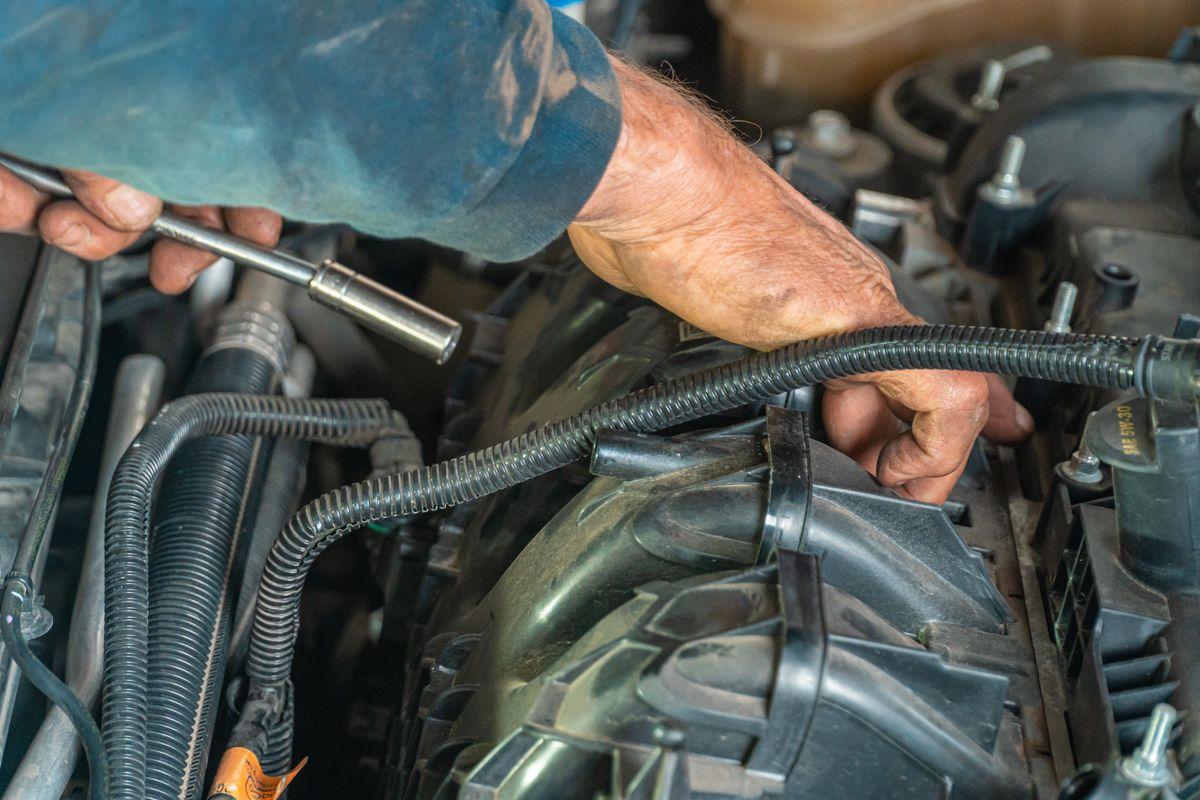
These posts consistently outperform every other content type for engagement, saves, and shares. They're the auto repair equivalent of a portfolio.
Educational Content That Proves Expertise
Your customers don't know the difference between a ball joint and a control arm. That information gap is where distrust lives. When you post a short video explaining what a grinding noise means, or a carousel showing the warning signs of brake failure, you're not just creating content — you're demonstrating expertise in a way that makes potential customers feel confident choosing you.
According to HubSpot data, short how-to videos achieve a 74% engagement rate, significantly higher than other content formats. And with 86% of consumers spending a quarter of their free time watching social media videos, this is where attention actually lives.
Social Proof: Reviews and Testimonials
When a customer leaves a five-star review, screenshot it and post it with a thank-you caption. When a customer picks up their car happy, ask if you can film a 15-second testimonial. These posts aren't bragging — they're evidence that real people trust you with their vehicles, which is exactly what a skeptical new customer needs to see.
Behind-the-Scenes and Team Spotlights
People trust people, not logos. Show the humans behind the shop. Introduce your technicians, highlight certifications, share the story of why you opened the business. A customer who recognizes your face from Instagram is already halfway to trusting you when they walk in.
A Simple Weekly Content Framework
You don't need a marketing degree to maintain a consistent social media presence. Rotate through four content types each week:
Day 1 — Trust: Shop story, technician spotlight, certification highlight, or behind-the-scenes photo.
Day 2 — Education: Seasonal maintenance reminder, warning sign explainer, "myth vs. fact" car care post.
Day 3 — Social proof: Customer testimonial, before-and-after repair photo, or a screenshot of a great review.
Day 4 — Community: Local event, seasonal service offer, shop milestone, or employee recognition.
This rotation eliminates the daily "what do I post?" question and ensures a balanced mix that builds trust over time without burning out.
The key to making this sustainable is batching. Set aside one two-to-three-hour block per week to shoot photos, write captions, and schedule everything. A shop owner who batches consistently will always outpace one who posts reactively — because reactive posting dies the moment the shop gets busy.
How AI Makes This Manageable for Busy Shop Owners
Let's be honest: the reason most auto repair shops don't post consistently isn't that they don't know what to post. It's that they're running a business. The bays are full, the phone is ringing, and social media falls to the bottom of the priority list every single day.
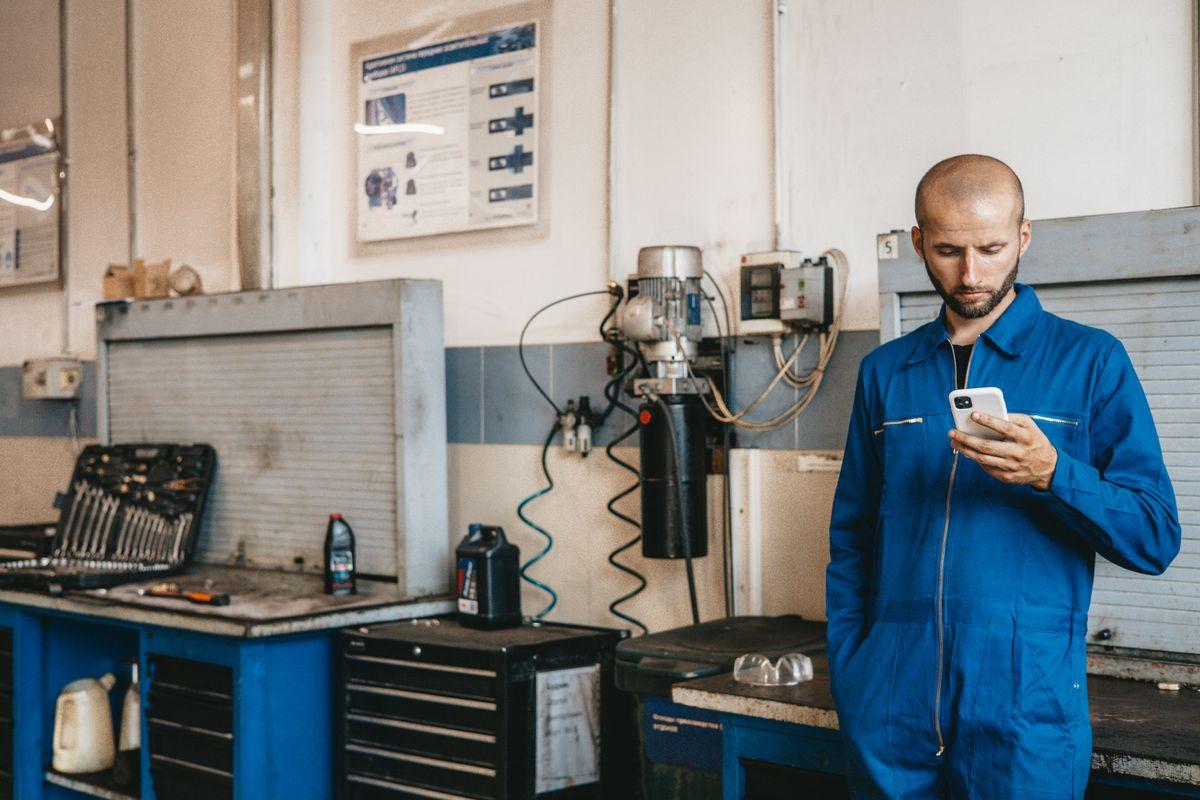
This is where AI-powered social media tools have changed the game. A platform like Picmim can generate a week of auto repair-specific content — educational posts, seasonal reminders, before-and-after captions — in the time it takes to write a single Facebook post. You review, approve, and schedule. No staring at a blank screen, no hiring a marketing agency, no leaving your Facebook page dormant for another month.
The shops that adopt AI tools for social media aren't replacing the human element — they're amplifying it. The AI handles the consistent posting cadence that builds trust over time, while you focus on the actual repair work that earns it.
Measuring What Matters
You don't need a complex analytics dashboard. Track three things:
Messages and calls from social media. If people are reaching out through Facebook Messenger or Instagram DMs, your content is working. These are warm leads — they've already seen your posts and decided to reach out.
Review velocity. Are you getting more Google and Facebook reviews since you started posting consistently? Active social media content reminds happy customers to leave reviews, which are the single biggest factor in local search ranking.
Booking correlation. Track how many new customers mention they found you on Facebook or Instagram. You don't need precise attribution — a simple "How did you hear about us?" at the front desk will tell you whether social media is driving real business.
Stop worrying about follower count. A shop with 800 local followers who regularly book appointments is worth infinitely more than one with 8,000 followers in another country.
Conclusion
The auto repair industry has a trust problem, and social media is the most efficient way to solve it. You don't need to go viral, you don't need a marketing agency, and you don't need to post every day. You need a consistent presence that shows your expertise, introduces your team, and proves that real customers trust you with their vehicles.
Start with Facebook. Post three times a week using the four-part rotation above. Add before-and-after photos of every major job. Respond to every review. In three months, you'll have a social media presence that actively fills your bays — and dismantles the skepticism that keeps drivers away from independent shops.
If you want to skip the learning curve, try Picmim free — it generates auto repair-specific social media content, schedules it automatically, and lets you focus on what you do best: fixing cars.
Sources: AAA (trust in auto repair), Alev Digital (social media influence on car buyer behavior), HubSpot (video engagement rates), Backlinko (global social media usage data), Best Version Media 2026 (digital convenience factors).