On this page
Here's the paradox of being a photographer in 2026: you spend your days creating stunning visual content, yet somehow you have no time to post any of it. You're drowning in galleries to edit, client emails to answer, and invoices to chase — and that Instagram feed you keep meaning to update? It hasn't seen a new post in three weeks.
You're not alone. The photography industry generates over $105 billion globally, with 73% of photographers running their own businesses, according to the Professional Photographers of America. Yet "client acquisition difficulty" ranks as one of the top challenges photographers report in industry surveys. The ones who solve it aren't necessarily better photographers — they're better marketers.
The data backs this up. While 94% of potential clients check a photographer's online presence before booking, only 22% of new clients actually find their photographer through social media, according to PPA's 2025 Marketing Survey. That gap — between how many people check your socials and how few actually discover you there — represents a massive opportunity. Photographers who fix their social media strategy consistently report higher booking rates, fuller calendars, and the ability to charge premium rates.
This guide breaks down exactly how to make social media work for your photography or creative studio in 2026, without sacrificing your editing time or your sanity.
Why Most Photographers Get Social Media Wrong
The biggest mistake photographers make on social media is treating it like a portfolio. Your website is your portfolio. Social media is your marketing channel — and those are fundamentally different things.
A portfolio says "look what I can do." Marketing says "here's why you should hire me, and here's how to do it right now." The photographers winning on social media in 2026 understand this distinction. They don't just dump untouched batches of client photos into a grid. They build narratives, show their process, and — most importantly — make it easy for potential clients to imagine themselves in the photos.
The second mistake is inconsistency. A photographer will post daily for two weeks after a busy wedding weekend, then go dark for a month while they catch up on editing. The algorithms punish this pattern ruthlessly. A study by Kamero found that photographers who commit to consistent posting — even at lower volume — see significantly better engagement and discovery than those who post in bursts followed by silence.
The third mistake is focusing on the wrong metrics. Follower count means almost nothing. According to 2026 social media analysis for photographers, the metrics that actually correlate with bookings are saves, shares, direct messages, profile visits, and website clicks. If your content strategy isn't driving those actions, you're optimizing for vanity, not revenue.
The Platforms That Actually Matter for Photographers
Instagram: Still the Essential Channel
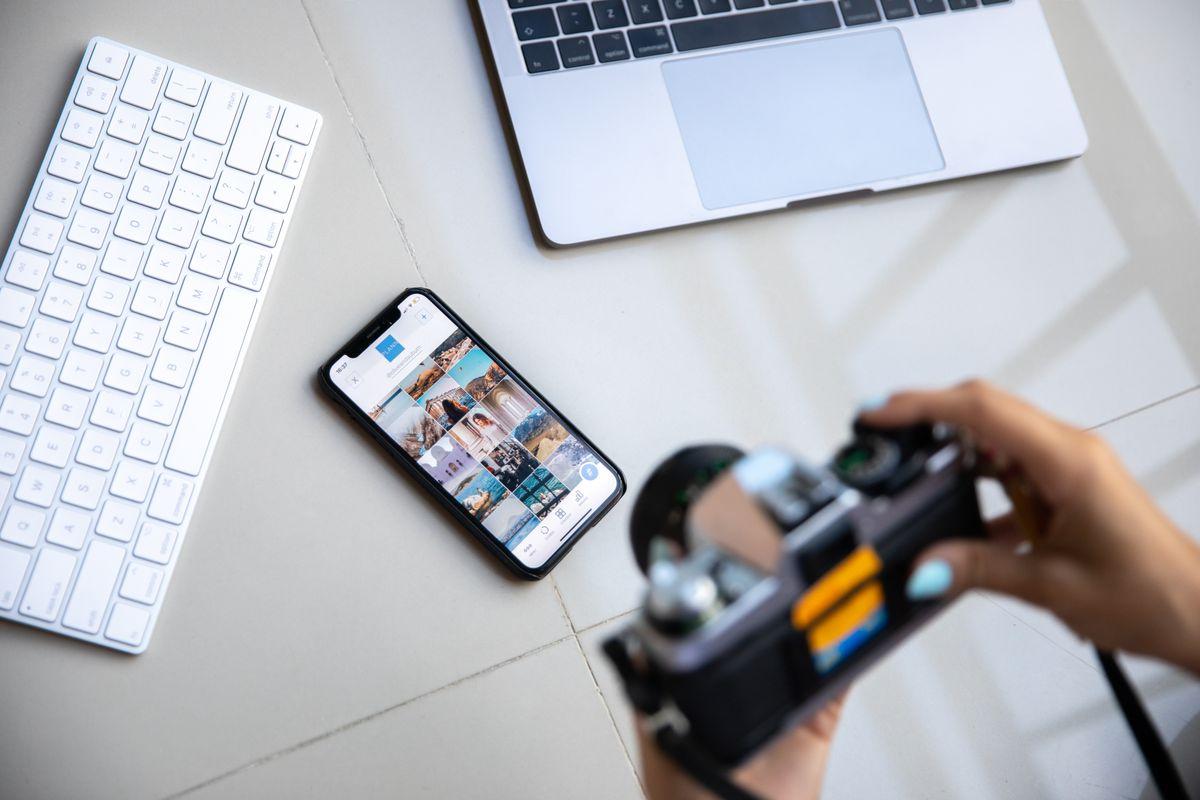
Instagram remains the single most important social platform for photographers in 2026. According to PPA's survey data, Instagram drives more client discovery than any other social platform — and the gap has widened as Instagram has added features that specifically favor visual creators.
What's changed is how Instagram works. The feed is no longer the primary surface. Reels dominate reach. Carousels with 8 to 10 slides generate the highest save and share rates, which signals value to the algorithm. Instagram Stories have become the primary place where potential clients evaluate whether you're active, responsive, and someone they'd want to work with.
For photographers, the winning Instagram formula in 2026 looks like this: two to three Reels per week (60 to 90 seconds each), one carousel post showcasing recent work with storytelling captions, and daily Stories showing your behind-the-scenes process, client interactions, and availability. Collaborative posts with venues, planners, and other vendors can double your exposure with exactly the audience most likely to book you.
TikTok: The Discovery Engine
TikTok offers the best organic reach of any platform in 2026 — by a significant margin. For photographers, it's particularly powerful because the content that performs well (behind-the-scenes, transformations, educational tips, and real client moments) requires almost zero additional production effort. You're already at the shoot. Hit record.
The photographers getting the most from TikTok treat it as an educational and entertainment channel, not a portfolio. Content like "how I pose couples who say they're awkward in photos" or "what I pack in my camera bag for a 12-hour wedding day" generates shares, saves, and — most importantly — DMs from potential clients in your area.
Three to five posts per week is the sweet spot. Original narration performs comparably to trending audio, so you don't need to chase every trend. What matters is consistency and providing genuine value.
Pinterest: The Long Game
Pinterest remains underrated for photographers, particularly those in wedding, portrait, and lifestyle niches. Pins have a shelf life of months rather than hours, and Pinterest users actively save and share visual inspiration. A single well-optimized pin with the right keywords can drive traffic to your portfolio for years.
For photographers, Pinterest works best as a distribution channel for blog content and curated portfolio collections rather than daily posting. Create boards organized by shoot type, venue, or style, and optimize pin descriptions with keywords your ideal clients actually search for.
The Content Mix That Converts Followers into Bookings
Behind-the-Scenes Content
This is the single highest-performing content category for photographers in 2026. Raw, authentic, unpolished behind-the-scenes content consistently outperforms polished portfolio posts. The data is clear: potential clients don't just want to see your finished work. They want to see what working with you actually feels like.
Content ideas that consistently generate engagement and inquiries:
Setting up at a venue before clients arrive — the empty room, the lighting decisions, the gear check. Real client reactions when they see their photos for the first time. Before-and-after editing comparisons that show your post-processing skill. Time-lapses of a full shoot day compressed into 60 seconds. Your camera settings and why you chose them for specific conditions.
Each of these serves a dual purpose: they demonstrate your expertise to potential clients while giving current clients content they'll want to share with their networks.
Social Proof and Testimonials
According to Wedding Wire's industry data, 82% of couples read online reviews before hiring a wedding photographer. But static review screenshots don't perform well on social media. Instead, turn testimonials into content.
A 30-second video of a client genuinely reacting to their gallery outperforms 50 polished portfolio posts. A carousel that tells the story of a full wedding day — getting ready through the last dance — with the couple's words woven into the captions, builds more trust than any review page.
When clients share your work on their own feeds, reshare it immediately. This is the most authentic form of social proof possible, and it puts your work in front of their entire network.
Educational Content
Educational content serves two purposes: it positions you as an expert, and it captures search intent. Content like "what to wear for family photos in autumn," "how to prepare for your engagement session," or "questions to ask your wedding photographer" directly answers the questions your potential clients are typing into search bars.
According to industry analysis, photographers who regularly publish educational content report 42% higher inquiry rates. The reason is simple: when someone finds your content helpful, they trust you. And when they trust you, they book you.
How AI Tools Help Photographers Maintain Consistency
The number one reason photographers fail at social media is time. Between shooting, editing, client communication, and running a business, there simply aren't enough hours to also be a full-time content creator.
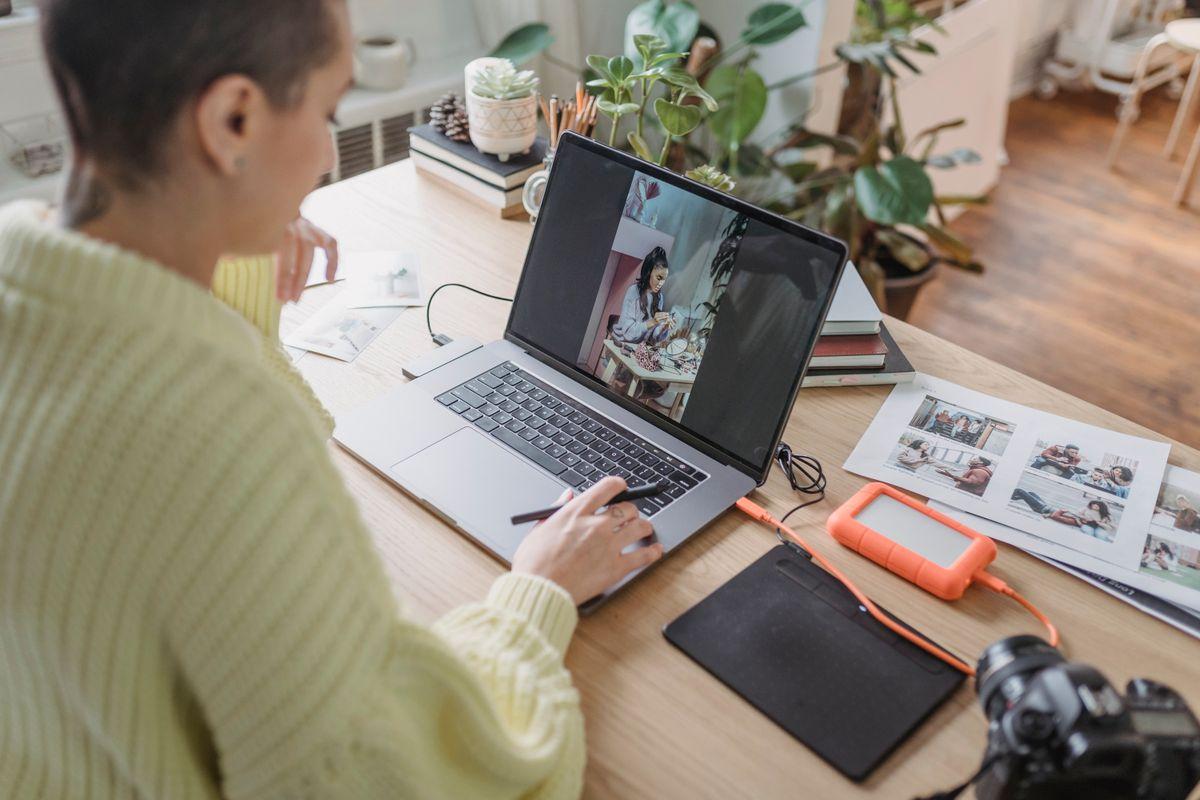
This is where AI-powered social media tools have become genuinely transformative in 2026. The right AI tool can handle the parts of social media that drain your time while keeping your authentic voice intact.
AI scheduling tools analyze when your specific audience is most active and automatically post at optimal times. AI content generators can draft captions that sound like you — not like a marketing robot — based on examples of your previous posts. AI image selection tools can identify which photos from a gallery will perform best on social media based on composition, color, and subject expression.
The photographers who adopt these tools report saving 15 to 20 hours per month on social media management — time they reinvest into shooting, editing, or simply having a life. More importantly, their consistency improves dramatically. Instead of posting in bursts and going silent, they maintain a steady presence that keeps the algorithm — and potential clients — engaged.
The Booking Funnel: Converting Social Media Attention into Paid Work
Social media attention is worthless if it doesn't lead to bookings. The most successful photographers in 2026 treat their social media as the top of a deliberate funnel.
Step one: Discovery. Someone finds you through a Reel, a TikTok, or a shared post. They visit your profile. Your bio clearly states what you do and where you work. Your pinned posts showcase your best work and link to your website.
Step two: Evaluation. They scroll through your feed. They see consistent, high-quality work mixed with behind-the-scenes content that makes you feel approachable and professional. They check your Stories to see if you're currently active. They read your captions and get a sense of your personality and working style.
Step three: Action. They send a DM, click the link in your bio, or submit an inquiry through your website. Your response time matters enormously here — photographers who respond within an hour are significantly more likely to convert inquiries into bookings.
Step four: Nurture. Even if they don't book immediately, they follow you. Over the following weeks and months, your consistent posting keeps you top-of-mind. When they're finally ready to book — whether that's next month or next year — you're the first photographer they think of.
Every piece of content you post should move someone through this funnel. If a post doesn't help with discovery, evaluation, or action, reconsider whether it's worth the time to create.
Common Mistakes That Kill Photographer Social Media ROI
Posting without strategy. Beautiful photos with generic captions ("Such a beautiful day with this lovely couple!") generate almost zero engagement. Every post should have a purpose: showcase expertise, build trust, answer a question, or prompt a specific action.
Ignoring local SEO. Photographers serve geographic markets, but many forget to geotag posts, use location-based hashtags, or mention their city in their bio. If someone searches "wedding photographer in [your city]" on Instagram, geotagged posts appear first.
Inconsistent branding. Your feed should feel cohesive — not because every photo has the same preset, but because a visitor can immediately tell what kind of photography you do and who you serve. Mixed messaging (weddings one day, real estate the next, food photography the third) confuses the algorithm and potential clients alike.
Ghosting your own comments. When someone comments on your post, respond. Every time. According to engagement analysis, photographers who respond to comments within two hours see 3.4x higher engagement rates on subsequent posts. Social media is a conversation, and ignoring your side of it signals to both the algorithm and potential clients that you're not paying attention.
Building a Sustainable System
The goal isn't to become a full-time content creator. The goal is to build a system that keeps your photography business visible to potential clients without consuming your life.
Start with one platform — Instagram if you serve consumer clients, LinkedIn if you're B2B. Commit to three posts per week for 30 days. Use AI tools to handle scheduling, caption generation, and optimal timing. Track the metrics that matter: DMs, profile visits, website clicks, and — most importantly — inquiries.
After 30 days, assess what's working. Double down on the content formats that drive inquiries. Cut what doesn't. Expand to a second platform only when the first one runs on autopilot.
The photographers who succeed at social media in 2026 aren't the ones with the most followers or the prettiest feeds. They're the ones who show up consistently, make it easy for potential clients to find and evaluate them, and treat social media as the business tool it is — not as an afterthought to the real work.
If you're tired of choosing between editing client galleries and maintaining your social media presence, that's exactly the problem Picmim was built to solve. Our AI-powered platform helps photographers schedule posts across every platform, generate captions that sound like them, and maintain the consistency that turns followers into paying clients. Start your free trial and reclaim those 20 hours a month for the work that actually pays the bills.
Sources: Professional Photographers of America 2025 Industry Survey, Wedding Wire 2025 Industry Report, Grand View Research 2025, Kamero 2026 Social Media Trends Analysis, ShootProof 2025 State of the Photography Industry