On this page
Social media advice for salons and beauty brands is everywhere. Verified numbers are not. This round-up only covers cases where a real, attributable metric exists — an SEC filing, trade press quoting the person behind the result, or national business press with named figures. They range from a single hairstylist's TikTok video to a $897.5 million acquisition, and every case ends with the specific mechanic a salon or beauty brand can actually copy.
This is the salon-and-beauty deep dive in our case-studies series. The main case-studies hub already tells five cross-industry stories — including its two beauty cases, Sephora Virtual Artist and Glossier — so we won't repeat them here. What follows are seven verified cases the hub doesn't cover: two at the salon chair, five at brand level.
The seven cases at a glance
| Case | Headline number | Evidence tier |
|---|---|---|
| Justin Toves-Vincilione (L.A. hairstylist) | 17M+ views on one haircut video; 50% of clientele new from TikTok | Trade press (Glossy) |
| Mylz Carlos Miraflores (Ontario barber) | 1M TikTok followers; prices raised from $33 to $58; booked 3 months out | Trade press (Glossy) |
| e.l.f. Cosmetics, #EyesLipsFace to rhode | 5B+ views and 3M user videos; later a $897.5M acquisition | Trade press + SEC 10-K filings |
| Fenty Beauty launch | 40 shades at launch; about EUR 500M in 2018 sales | The Guardian + LVMH earnings remark |
| Rare Beauty | A reported $350M in 2023 sales; $2B sale consideration | CNBC citing Business of Fashion/Bloomberg |
| Mielle Organics | Viral video Dec 27, 2022; P&G acquisition announced Jan 11, 2023 | Trade press + dated wire reports |
| Huda Beauty | 26M+ Instagram followers by 2018; billion-dollar brand | National press (USA Today) |
Case 1: One hairstylist, one video, 17 million views
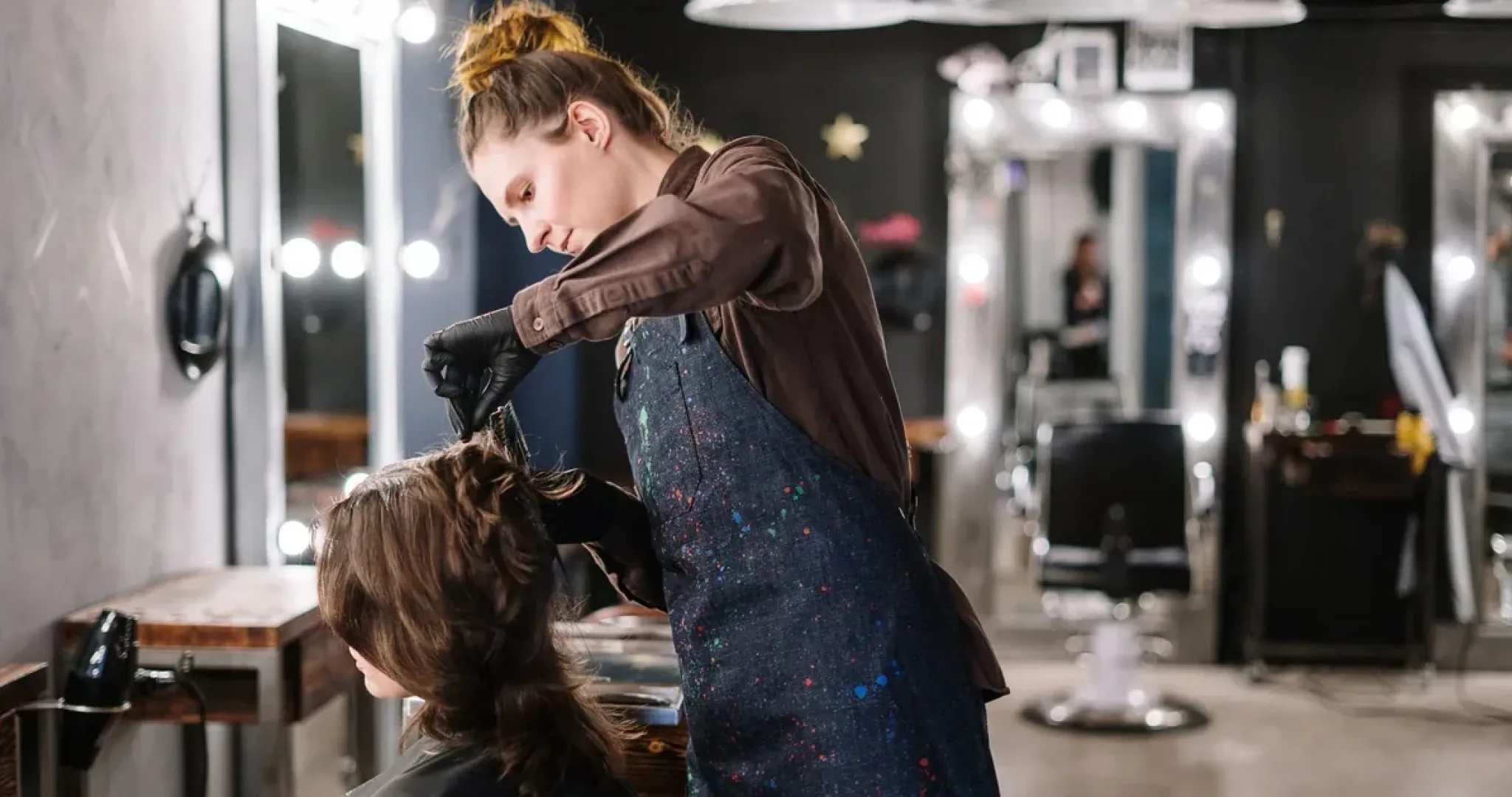
Justin Toves-Vincilione, a hairstylist working in a Santa Monica Ulta Beauty store salon, started posting haircut tutorials on TikTok in April 2022. His August 2022 “butterfly cut” video earned over 17 million views, and he built nearly 90,000 TikTok followers plus 158,000 Instagram followers in six months, according to Glossy’s October 2022 report.
The business results, in his own words to the same reporter: his previously slow schedule filled for the month, he estimates that 50% of his clientele is “brand new, straight from TikTok”, and clients flew in from Texas, Arizona and Chicago — one booked a month out and made a weekend trip of the appointment. (Follower and view counts are as reported in October 2022 and have likely changed since; the mechanics are the durable part.)
What to copy: pick one signature, repeatable service and film it relentlessly. Tutorials on cuts clients already ask about — not polished brand ads — are what converted views into booked chairs here.
Case 2: The barber who raised prices 76% because TikTok filled his books
Mylz Carlos Miraflores of Identity Barbershop in Mississauga, Ontario, grew to 1 million TikTok followers after a 3-million-view hair-styling video. He estimates 60% of his clients now find him through TikTok, drawing customers from across Canada and the US, and is fully booked three months in advance, Glossy reports. Because demand outran the chair, he raised his haircut price from $33 to $58 — a 76% increase — with a further rise to $72 planned, telling the reporter that otherwise “my regular clients wouldn’t even be able to get an appointment.”
The same article documents the pattern at scale: St. Louis stylist Siiri Parks, with more than 3.6 million followers, said “my books are closed for new clients completely,” with clients flying in from other states, Canada and England — and stylist Glenn Ellis’s farthest client flew from Thailand.
What to copy: social reach is pricing power. When your books stay full for months, the documented move is raising prices — not adding hours. Track where new clients found you so the link between content and chair revenue stays measurable.
Case 3: e.l.f. Cosmetics — from a 5-billion-view challenge to a $897.5M acquisition
In October 2019, e.l.f. Cosmetics launched the #EyesLipsFace challenge on TikTok, built around an original track created with Grammy-winning producer iLL Wayno and Republic Records. The campaign “received over 5 billion views” and 3 million TikTok videos were made featuring the song; Lizzo, Ellen DeGeneres and Reese Witherspoon joined the challenge without being paid; and the #elfcosmetics hashtag had already passed 3.5 million views before e.l.f. spent on paid media — all per CMO Kory Marchisotto, quoted in Glossy in May 2020.
The financial aftermath is public record. e.l.f. Beauty’s FY2021 Form 10-K shows net sales up 12% to $318.1 million for the year ended March 31, 2021, e-commerce growth of 64%, and nearly 12 million social-media followers. One honesty note: the 10-K credits e-commerce, international and retail strength broadly — read the campaign and the financials as a timeline, not a proven causal chain.
The arc kept climbing. Per the FY2026 Form 10-K, e.l.f. acquired HRBeauty LLC — rhode, the beauty brand founded by Hailey Bieber — on August 5, 2025 for a purchase price of $897.5 million (plus up to $200 million in contingent consideration). The rhode acquisition contributed $293.5 million of e.l.f.’s $323.0 million net-sales increase in FY2026, taking net sales to $1,636.5 million, up 25%. A creator-founded, social-first beauty brand became acquisition-grade revenue — the strongest evidence tier in this article, straight from audited filings.
What to copy: build for the platform’s native mechanics — an original sound others can use beat a polished ad spot here. Participation, including unpaid celebrity joins, came from a challenge people wanted to be seen doing.
Case 4: Fenty Beauty — the launch that made 40 shades the standard
Rihanna launched Fenty Beauty on September 8, 2017 with foundations in 40 shades “right from the start,” as The Guardian reported that December. One month in, the brand was valued at $72 million; it became Harvey Nichols’ biggest beauty launch to date, surpassing even MAC; and Rihanna herself had 58.5 million Instagram followers to launch from.
The scale-up number comes from LVMH: CEO Bernard Arnault told investors the brand did “about 500 million [euros] in sales” in 2018, “starting from zero” (per LVMH’s earnings call, reported by Snobette). Note the wording: the $72 million figure is the Guardian’s “valued at $72m after just one month of sales” — not the “earned media value” phrasing often repeated elsewhere.
What to copy: the product decision was the marketing. Serving customers the industry ignored — textured hair, deeper skin tones, underserved shade ranges — generated the story, and the founder’s audience lit the fuse. Salons serving any under-served clientele hold the same card.
Case 5: Rare Beauty — a $350M year built on one viral blush
Selena Gomez launched Rare Beauty on September 3, 2020 (per Wikipedia’s launch record), and the brand’s liquid blush went viral on TikTok in 2022. CNBC reported in April 2024 that the brand “made a reported $350 million in sales in 2023, according to Business of Fashion,” and that Bloomberg had reported Gomez was weighing offers for a possible $2 billion sale. One percent of every sale funds the Rare Impact Fund, which targets $100 million by 2030.
Attribution tier, plainly: the $350M and $2B figures are CNBC attributions to Business of Fashion and Bloomberg — reported, not audited. Even discounted, the shape holds: a creator-first brand, one hero SKU, a mission customers could join.
What to copy: let one product carry the story. Rare Beauty’s feed didn’t need to make everything famous — the blush did that — and the mission gave buyers a reason beyond the product.
Case 6: Mielle Organics — 15 days from a viral video to an acquisition
On December 27, 2022, TikToker Alix Earle — then with more than 3 million followers — featured Mielle Organics’ Rosemary Mint Scalp & Hair Strengthening Oil in her “favorite Amazon beauty finds” video. Demand surged and the product sold out in places; as beauty writer Jihan Forbes put it in Glossy’s coverage, “Once things get popular on TikTok, they’re gonna sell out.” Fifteen days later, on January 11, 2023, P&G Beauty announced its acquisition of Mielle Organics.
Two cautions keep this honest. First, the sources document a timeline — viral video, then acquisition — not causation; nobody claims one video caused the deal. Second, the virality prompted real concern from Mielle’s core customers about what a mainstream acquisition could mean for a Black-founded brand and its formulas, coverage Glossy addressed directly. That community trust is the asset; it deserves protecting more than the spike.
What to copy: cultivate the reviewers and everyday creators your clients already trust — Earle’s video was a favorites list, not a partnership. And plan inventory for virality: a sellout your regulars can’t buy through costs you your most loyal customers.
Case 7: Huda Beauty — from blog to billion-dollar brand
Huda Kattan started a beauty blog and YouTube channel in 2010 and “transformed a beauty blog and YouTube channel into a thriving career and business,” as USA Today put it in 2018 — a cosmetics line that became a billion-dollar brand. By August 2018 she counted more than 26 million Instagram followers and 2 million-plus YouTube subscribers. It’s the canonical creator-to-brand arc in beauty: audience first, product second.
What to copy: teach, don’t just display. Tutorials and honest product opinions built the trust that later made the product line sell — the same sequence works in miniature for a stylist building a product or service menu.
The platform shift behind these numbers
Why do so many of these cases run through TikTok? The platform’s own commissioned data — label it as such — explains the pull. Net Influencer reported in May 2026 that TikTok Shop told Modern Retail US small-business sales on the platform grew 66% in 2025, with more than 215,000 small businesses actively selling (up 25%). A GlobalData survey commissioned by TikTok Shop of 6,000 US consumers found 67% turn to TikTok Shop to discover new products and brands — ahead of Amazon at 57% — and that 72% of brands discovered there were small businesses; the cited example, Mavwicks Fragrances, went from $300–400K to $32 million in annual sales in its first year on the platform. These are platform-commissioned figures: context for where discovery is happening, not independent verification, and no promise of any individual salon’s results. For what’s working on the platform right now, see our TikTok trends breakdown and how the Instagram algorithm works in 2026.
What a small local business can realistically expect (our own numbers)
Full provenance disclosure: this one is our own case, not independent journalism. In our documented Slovenian bakery case study, a single-location local business moved its engagement rate from 2.1% to 3.2% to 3.8% over its first weeks of consistent posting, at about 25 minutes of owner time per week using Picmim. The externally verified cases above show the ceilings; this shows the floor — what consistency alone does for a local business with no celebrity founder and no ad budget.
How to apply these case studies to your salon or beauty brand
- Start at the chair, not the brand. Toves-Vincilione and Miraflores were one person with a phone before they were case studies. Our hair salon and beauty studio playbook and beauty salon and barbershop guide translate that into a weekly routine.
- Ride sounds and trends fast. e.l.f. built an original track; Mielle rode an organic favorites video. Speed matters more than polish — the formats driving sales change monthly.
- Make community content the engine. Three million user videos carried #EyesLipsFace; Earle’s unpaid review moved more product than most ad campaigns. Our user-generated content strategy guide covers how to earn that.
- Convert attention into pricing power. Miraflores raised prices 76% once TikTok filled his books — demand you can’t monetize is just server traffic.
- Play the small-business card on purpose. The hub’s cross-industry cases show big-brand budgets; the salon cases here show reach without one. We compared the two playbooks in small business vs. big brand social media, and this influencer-marketing primer covers seeding the Earle-tier creators.
- Stay local while going viral. Every stylist case fed one chair or one shop — our local-business social media guide keeps the geography in the strategy.
One last date-stamp: reach numbers age fast. The stylist and barber figures above are as reported in October 2022, the Fenty and Huda numbers are 2017–2019, and the e.l.f., rhode and TikTok Shop figures are 2021–2026. The mechanics repeat; the metrics are snapshots. When you want the five cross-industry stories that round out this series, the case-studies hub has them, from Lay’s and Chipotle to Sephora and Glossier.
Ready to become the next case study? Picmim drafts on-brand posts, schedules across every platform, and keeps your salon or beauty brand consistently visible for €29/month — start with a free preview of what your own feed could look like.