
On this page
If you run a fitness studio or work as a personal trainer, you already know that social media is where your future clients are spending their time. The global fitness market is projected to reach $134 billion in 2026, with boutique studios driving 34% of all new health club sign-ups. But here's the reality: most trainers and studio owners are too busy coaching clients, managing schedules, and running their business to post consistently online.
The result? Your competitors who do show up on Instagram and TikTok are the ones getting found. One in three consumers now discovers new businesses through social media, and that number is climbing. When someone searches "personal trainer near me" or "best gym in [city]," the businesses that show up are the ones with active, engaging social media profiles.
This guide breaks down exactly how fitness businesses can use social media to attract more clients in 2026 — without spending hours every day on content creation. Whether you're a solo trainer, a boutique studio with 3–5 staff, or a small gym chain, these strategies will help you turn your social media presence into a reliable client acquisition channel.
Which Platforms Actually Matter for Fitness Businesses
Not every platform deserves your time. Let's break down where fitness clients actually hang out and what each platform does best.
Instagram is the undisputed king of fitness marketing. With roughly 2 billion monthly active users and a user base skewed toward the 18–34 demographic — exactly your target market — Instagram is where fitness brands get discovered. Over 130 million users tap on shopping posts every month, which means people are actively buying through the platform. For trainers, Instagram's visual format is perfect for showing transformations, workout demos, and behind-the-scenes studio content. The platform's recent integration with Google search indexing means your public posts are now discoverable through search engines too, giving you double the visibility.
TikTok has quietly become the go-to search engine for fitness content. An impressive 74% of Gen Z use TikTok for search, and 51% prefer it over Google. When someone wants to see a quick form check on a deadlift or a 30-second core workout, they go to TikTok. For fitness professionals, this is enormous: your short tutorial videos can reach people actively searching for exactly what you offer. The algorithm rewards consistency and usefulness over production value, which means a trainer posting quick phone-filmed tips can outperform heavily produced content.
Facebook remains essential for local fitness businesses. With nearly 3 billion monthly users and the highest adoption rate in the 25–44 age range, Facebook is where your local community organizes. Facebook Groups, Events, and Live sessions are particularly powerful for gyms and studios — they create the community feel that drives member retention and referrals. If you run group classes, challenges, or open houses, Facebook Events still deliver reliable local reach.
YouTube serves a different purpose: long-form authority building. While YouTube Shorts now average 110 times more views than regular videos from the same channels, the platform's real strength for fitness businesses is search discoverability. Tutorial videos on proper squat form, meal prep guides, and workout programs live forever in search results, bringing you clients months or even years after you post them.
The recommendation for most fitness businesses: pick Instagram and one other platform (TikTok for younger audiences, Facebook for local community, or YouTube for educational content) rather than trying to be everywhere at once.
Content Types That Convert Followers Into Paying Clients
Posting for likes is easy. Posting for clients requires a different approach. After analyzing what works across the fitness industry, four content types consistently produce results.
Workout demonstrations are your most valuable content asset. Short videos showing proper exercise form, a quick workout finisher, or a mobility drill do three things at once: they prove your expertise, they provide immediate value, and they're highly shareable. A trainer who posts four workout videos per week will outgrow one who posts once a month with studio lighting. Keep them under 60 seconds, film vertically with your phone, and focus on one exercise per video so it's searchable.
Client transformations and testimonials are your social proof. Before-and-after posts, client shoutouts, and video testimonials build more trust than any ad ever could. The key is to make them authentic — real clients, real results, real stories. Always get written permission before posting someone's transformation, and focus on how they feel (stronger, more confident, pain-free) rather than just how they look.
Behind-the-scenes content humanizes your brand. Show your studio at 6 AM when the first clients arrive. Film yourself programming workouts for the week. Share the messy reality of owning a fitness business alongside the polished results. This type of content builds the parasocial relationship that turns followers into loyal clients. People want to train with someone they feel like they know.
Educational content positions you as the expert in your niche. Quick nutrition tips, myth-busting posts about popular fitness trends, and answers to questions you hear from clients every day. If five clients ask you the same question this week, that's a social media post. Educational content is also what shows up in search results, bringing you traffic long after you post it.
How to Stay Consistent Without Living on Your Phone
The number one complaint we hear from fitness business owners is that they don't have time for social media. Here's the truth: you don't need to post every day to see results. You need a system.
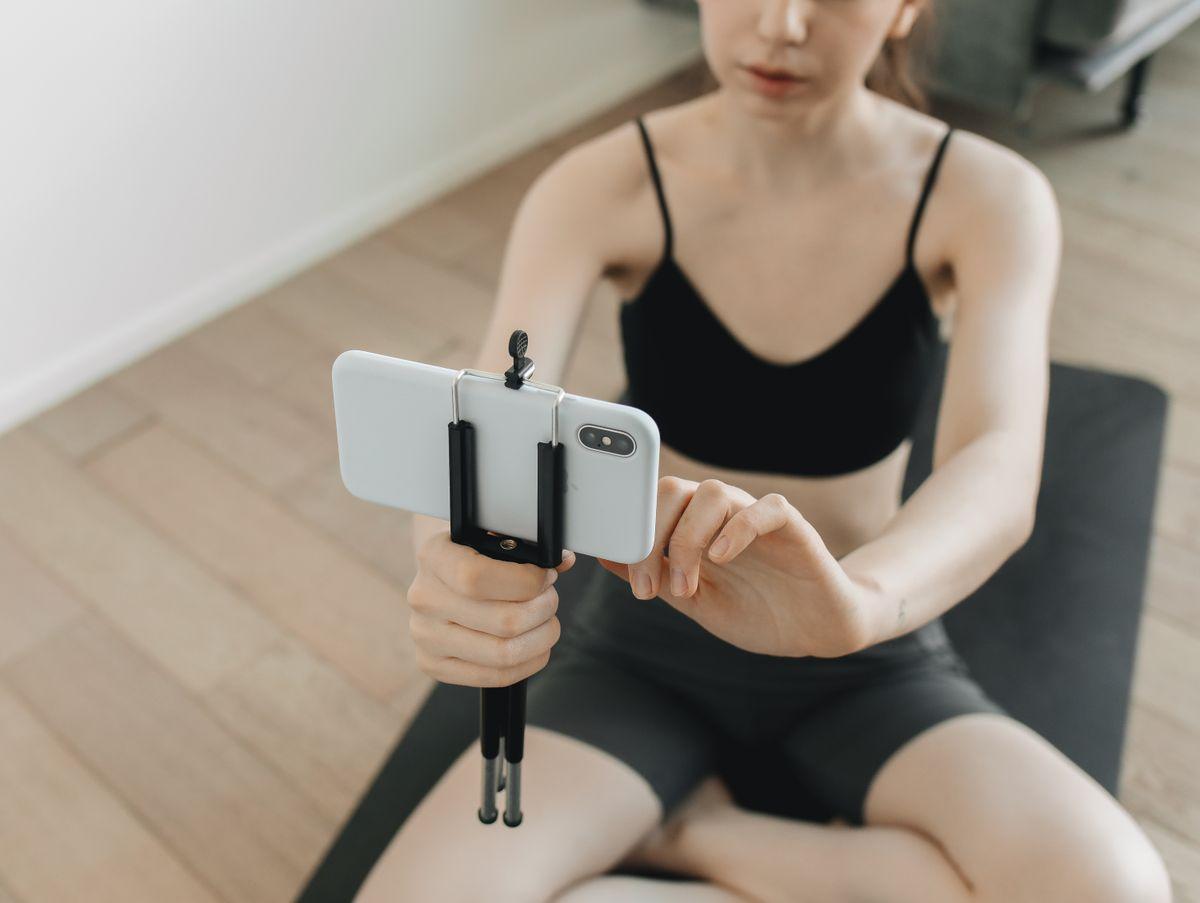
Batch your content creation. Pick one day per week — for most trainers, Sunday afternoon works well — and film all your content for the week in two to three hours. Set up your phone on a tripod, change shirts between sets, and knock out workout demos, educational talking-head videos, and behind-the-scenes clips in one session. Most trainers can produce a full week of content in a single batching session when they do it properly.
Use AI tools to handle the planning. This is where platforms like Picmim come in. Instead of staring at a blank screen wondering what to post, AI can analyze what's working in your niche, suggest content ideas based on trending fitness topics, and even write captions that match your brand voice. You can generate a month of social media content in one afternoon — captions, hashtags, and scheduling included.
Repurpose everything. A single workout video can become an Instagram Reel, a TikTok, a YouTube Short, and a Facebook post. A client testimonial can be quoted in your newsletter, turned into a graphic for Instagram, and filmed as a video interview. The goal isn't to create more content — it's to get more mileage from what you already create.
Schedule in advance. Posting manually every day is a recipe for inconsistency. Use a scheduling tool to queue up your content for the week or month, then forget about it. This frees you to focus on engaging with comments and DMs — the actual relationship-building work — rather than scrambling to post something every morning.
Local SEO and Social Media: The Combination That Wins Clients
For fitness businesses, local discovery is everything. Someone in your city searching "personal trainer" or "yoga studio near me" is a hot lead — they have intent, they're nearby, and they're ready to buy. Social media and local SEO work together to make sure they find you.
Claim and optimize your Google Business Profile. This is non-negotiable for any fitness business with a physical location. Keep your hours, address, and photos updated. Post your class schedule as Google Posts. Encourage happy clients to leave reviews — Google reviews are one of the top ranking factors for local search results.
Use location tags on every post. Tag your city, your neighborhood, and your studio location on Instagram and Facebook posts. This helps the platforms understand where you are and show your content to people nearby.
Create location-specific content. Post about local events you're participating in, collaborations with other local businesses, and community initiatives. This signals to both social media algorithms and search engines that you're an active part of the local fitness community.
Encourage check-ins and user-generated content. When clients check in at your studio or tag you in their workout posts, it creates a web of local social signals. Offer a small incentive — a free class pass, a branded water bottle — for clients who tag your business in their stories or posts.
Measuring What Actually Matters
Vanity metrics like follower count and likes are nice for the ego, but they don't pay the bills. Here's what to track instead.
Inbound inquiries are the ultimate metric. How many DMs, emails, or phone calls did you get from social media this month? If someone messages you asking about training rates or class schedules, that's a direct lead from your social media presence. Track these conversations and you'll quickly see which platforms and content types drive real business.
Website clicks from social media tell you whether your content is compelling enough to make people want to learn more. Check your analytics monthly to see how much traffic comes from each social platform. Instagram and TikTok typically drive the most traffic for fitness businesses.
Booking rate is what ties it all together. When someone discovers you on social media and books a session, that's your social media ROI in its purest form. Use a simple tracking system — ask new clients how they found you, or use a unique booking link in your social media bios.
Engagement quality matters more than quantity. Fifty thoughtful comments from local prospects are worth more than five thousand generic emoji reactions from people on the other side of the world. Pay attention to who's engaging, not just how many.
The Bottom Line for Fitness Businesses
Social media for fitness studios and personal trainers isn't about going viral. It's about being the obvious choice when someone in your area is ready to get fit. The businesses that win are the ones that show up consistently with helpful content, make it easy for potential clients to take the next step, and build genuine relationships through engagement.
You don't need a marketing degree, expensive equipment, or hours of free time every day. You need a simple system: batch your content, use AI tools to handle the heavy lifting, focus on the platforms where your clients actually spend time, and measure the metrics that connect to revenue.
If you're ready to put your fitness social media on autopilot, Picmim can help. Our AI-powered platform creates, schedules, and optimizes your social media content so you can focus on what you do best — coaching clients and growing your business. Start your free trial and see how much time you can reclaim.
Sources: IHRSA Global Health and Fitness Industry Report 2026, Amra & Elma Fitness Marketing Statistics 2026, Trainerize Fitness Social Media Guide 2026, Instagram Business Data, Backlinko Facebook Statistics, DemandSage TikTok and Instagram Statistics