On this page
When a parent hears about your daycare from a friend, the first thing they do is look you up on Facebook or Instagram. They scroll through your photos, skim your posts, and decide within about 90 seconds whether to schedule a tour or keep looking. If your social media presence looks abandoned, generic, or worse — nonexistent — you've lost that family before you ever get to speak with them.
This is the reality for childcare centers in 2026. According to research from Care.com, 89% of parents search online first when looking for childcare. The National Association for the Education of Young Children found that 78% of parents visit at least three facilities before making a decision. Your social media profiles are often the first — and sometimes only — impression parents get of what daily life looks like inside your walls.
The good news is that running effective social media doesn't require a marketing degree or an agency contract. It requires a clear strategy, a manageable posting rhythm, and consistency. This guide walks through exactly what works for daycare and childcare centers right now, with data and practical examples you can apply this week.
Why Social Media Matters More for Childcare Than Almost Any Other Business
Most local businesses use social media to drive sales. Childcare centers use it for something more fundamental: building trust with parents who are handing over their most precious possession.
Social media plays three distinct roles for childcare providers. The first is discovery — parents find new centers through Facebook recommendations, local parenting groups, and Instagram searches. The second is validation — even when a parent hears about you through word of mouth or a Google search, they check your social profiles as a credibility test. The third is retention — active social media reminds current families why they chose you, which directly improves re-enrollment rates.
The data backs this up. Childcare marketing research shows that centers with active, well-managed social media profiles receive two to three times more inbound tour requests than those with neglected accounts. Given that the average retention rate for childcare centers sits at 82% annually, and acquiring a new family costs significantly more than keeping an existing one, the compound effect of strong social media is substantial.
Consider the competitive landscape. The childcare industry is worth over $60 billion annually, with approximately 675,000 establishments operating in the US alone. About 85% of these are small businesses with fewer than 20 employees. In a fragmented market like this, local reputation and visibility matter far more than brand recognition. Your social media presence is how you build both.
The Platform Strategy: Where Daycare Centers Should Actually Post
You don't need to be everywhere. You need to be where parents already spend their time.
Facebook remains essential. It's still the highest-concentration platform for parents in 2026. Local parenting groups, community discussions, and recommendation threads all happen here. Facebook is where a mom asks "anyone know a good daycare in [neighborhood]?" and gets fifteen replies. If your center has an active, engaging Facebook presence, you're more likely to be recommended in those conversations. Facebook also offers the best advertising tools for reaching local families, with average costs of $1.35 per click for childcare-related campaigns.
Instagram is equally critical. This is the visual platform parents use to research and validate centers. A parent who heard your name from a friend will check your Instagram to see what your classrooms look like, whether the teachers seem happy, and what the children are actually doing during the day. Instagram Reels get significantly more reach than static posts — a 15-second clip of morning circle time can outperform a polished photo gallery.
TikTok is optional but growing. Younger millennial and Gen Z parents are increasingly active here. Educational content about child development, parenting tips, and behind-the-scenes glimpses perform surprisingly well. Many centers report organic reach on TikTok that dwarfs their other platforms, though the audience skews younger.
YouTube is the long-term play. Virtual tour videos, FAQ sessions, and parent testimonials get discovered through search for months or even years after posting. If you can produce even basic video content, YouTube functions as a 24/7 enrollment tool that works while you're caring for children.
LinkedIn and other platforms are generally not worth the effort unless you serve corporate childcare clients or want to attract families through professional networks.
Privacy: The One Rule That Comes Before Everything Else
Before posting a single photo, get your privacy framework right. The fastest way to destroy your center's reputation is posting a child without explicit parent permission.
Every family's enrollment paperwork should include a social media consent form with three options: full photo permission, hands-and-back-of-head permission only, or no photos at all. Keep a current list at the front desk of which children cannot be photographed, and ensure every staff member knows it.
Never post children's full names, birthdays, or addresses. First names only, and only with permission. Avoid posting check-in or pickup times that could reveal family patterns. The good news is that most centers can post regularly and engagingly without ever showing an identifiable child's face. Focus on teachers, classroom environments, art projects, wide shots, and activities — your content will be just as compelling without creating privacy risks.
Five Content Pillars That Actually Work for Childcare Centers
Random posting fails because you run out of ideas, posting feels like a chore, and your feed looks incoherent. Strategic posting works because each post serves a purpose. Build your content around these five recurring themes.

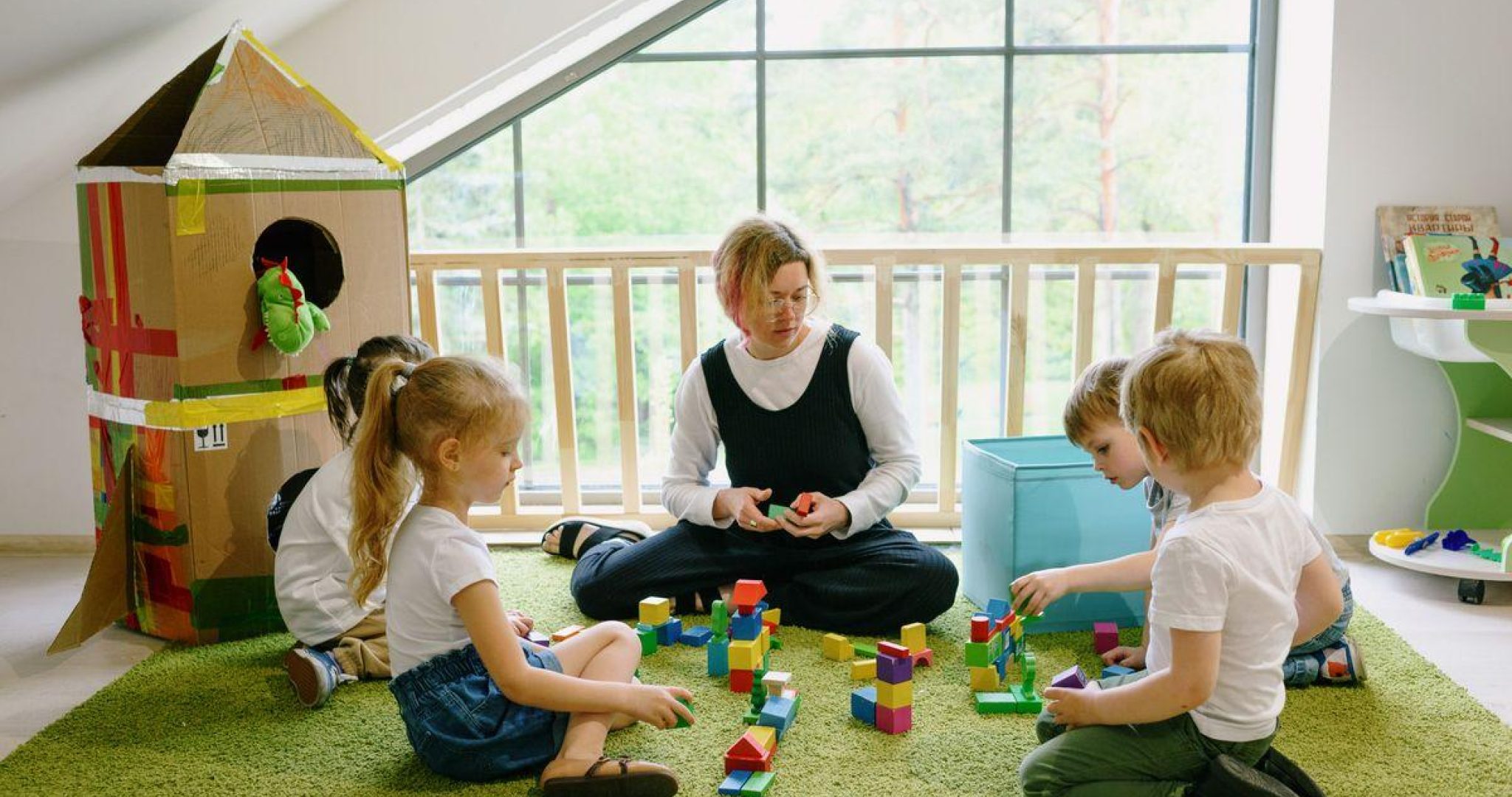
Behind-the-scenes content shows what happens inside your center during a normal day. Morning routines, classroom setups, lunch preparation, outdoor play, naptime arrangements. Parents want to see your environment because it answers their most fundamental question: "Will my child be safe and happy here?" These posts build trust faster than any marketing copy.

Teacher and staff highlights introduce the people who will be caring for children. Share their backgrounds, why they chose early childhood education, what they love about teaching. Parents enroll because of teachers, not facilities. Making your staff visible and human is one of the most effective enrollment drivers available to you.
Educational tips for parents demonstrate your expertise. Sleep strategies for toddlers, picky eater solutions, language development milestones, age-appropriate activities — content that helps parents even if they never enroll. This positions your center as a trusted resource, not just a service provider. When these parents eventually need childcare, you're the first name that comes to mind.
Community and culture posts showcase celebrations, holidays, special events, and milestone moments. This is where parents see the warmth of your center and begin to picture their own family as part of it. These posts also remind current families why they chose you, which supports retention.
Social proof content includes parent testimonials, reviews, and success stories. Video testimonials perform three times better than text, according to childcare marketing research. Even a simple quote card with a parent's first name and how long their child has been enrolled can be powerful.
How Often Should You Post?
Consistency beats frequency every time. Three quality posts per week will outperform daily posting of mediocre content. A realistic rhythm for most small childcare centers looks like this: one behind-the-scenes post on Monday, one educational tip on Wednesday, and one community or staff highlight on Friday. Add Instagram Stories daily if you can — even a quick photo of the day's activity counts.
If you're using a scheduling tool, batch your content creation into one afternoon every two weeks. Take all your photos and videos in a single session, write your captions, and schedule everything at once. This is where AI-powered tools become valuable — they can suggest captions, generate post ideas from your photos, and handle the scheduling automatically.
Using AI Without Losing the Personal Touch
Childcare is fundamentally a relationship business. Parents need to feel that real humans are caring for their children, not robots. So how does AI fit without undermining that trust?
The key is using AI for the work that doesn't require a human touch, freeing you to focus on what does. AI can generate caption ideas from a photo you took of a classroom activity. It can suggest the best times to post based on when parents in your area are online. It can help you write educational content about child development topics. It can schedule posts across Facebook and Instagram simultaneously.
What AI should never do is replace genuine moments. A photo of a real teacher reading to real children, with a caption in your center's authentic voice, will always outperform AI-generated content. Use AI as your marketing assistant, not your replacement. The centers that strike this balance effectively save 15-20 hours per month on social media management while actually improving their output quality.
Common Mistakes That Hurt Daycare Centers on Social Media
The most common mistake is posting only when enrollment drops. Parents can tell when your sudden burst of activity is driven by empty spots rather than genuine community engagement. Social media works as a trust-building compound investment — regular, consistent posting over months and years creates a library of content that parents discover when they're ready to research centers.
The second mistake is focusing on polished marketing over authenticity. Parents in 2026 are deeply skeptical of corporate-looking childcare content. They want to see real classrooms, real activities, and real teachers. A phone photo of finger painting will outperform a stock image of a smiling child every time.
The third mistake is ignoring comments and messages. When a parent comments on your post or sends a direct message asking about availability, they expect a response within hours — ideally within one hour. Research shows that centers responding to inquiries within the first hour see significantly higher conversion rates. If you can't monitor messages throughout the day, use an auto-responder that acknowledges the message and sets expectations for when you'll reply.
Measuring What Matters
Don't get lost in vanity metrics. For childcare centers, the metrics that actually matter are tour bookings, enrollment inquiries, and retention rates. Track how many parents mention finding you on social media when they call or email. Ask new families during onboarding which of your platforms they looked at before scheduling a visit.
Pay attention to engagement patterns — which posts generate comments and shares from local parents, not just likes from your staff and friends. A post that gets 15 comments from parents in your community is worth more than a post that gets 200 likes from people in other cities.
Email open rates for childcare centers average 38.5%, significantly above the global average across industries. If you're building an email list from your social media followers, you have a highly engaged audience that wants to hear from you.
A Practical Starting Point
If you're starting from scratch or rebuilding a neglected presence, don't try to do everything at once. Start with Facebook and Instagram. Spend two weeks taking photos and short videos during your daily routine — classroom activities, outdoor play, art projects, teacher interactions. Don't post yet. Build a content library first.
Then, pick a Wednesday and launch with three posts that week. One behind-the-scenes photo with a genuine caption about a typical morning. One educational tip post sharing something your teachers know that parents would find helpful. One staff highlight introducing a teacher. Use the same filters or editing style so your feed looks cohesive.
From there, maintain the rhythm. Three posts per week, every week. Review what generates engagement after the first month and adjust. The centers that see the best results from social media aren't the ones with the biggest budgets — they're the ones that show up consistently, authentically, and with genuine care for the families they serve.
If managing all of this sounds overwhelming alongside the actual work of running a childcare center, tools like Picmim can help. Picmim's AI-powered platform helps you schedule posts, generate content ideas, and manage multiple platforms from a single dashboard — designed specifically for small businesses that don't have time to become social media experts. Because your priority is the children in your care, not figuring out what to post on Instagram.
Sources: Care.com Cost of Care Survey 2025; NAEYC 2025; IBISWorld 2026; Childcare Marketing Solutions 2025; BrightLocal 2025; Pew Research 2025