On this page
If you run a construction company, social media probably isn't the first thing on your mind at 6 AM when you're reviewing blueprints or heading to the job site. You've got crews to manage, deadlines to hit, and margins to protect. Posting on Instagram can feel like a distraction from actual work.
But here's the reality: 97% of construction industry professionals are already on social media, and 82% of construction businesses report improved brand visibility from it. The question isn't whether your competitors are posting — it's whether they're doing it well enough to steal the projects you should be winning.
Construction is a trust business. Nobody hands a €50,000 renovation or a €500,000 commercial build to a company they've never heard of. Social media is how you build that trust at scale — showing your work, your craftsmanship, and your professionalism before a potential client ever picks up the phone.
This guide breaks down exactly how small and mid-sized construction companies can use social media to win more projects, with data from 2026 and practical steps you can implement this week.
Why Construction Companies Struggle with Social Media (And Why It Matters)
The construction industry has historically been slow to adopt digital marketing. A ResearchGate study on social media in construction found "very low usage" across organizations, even when leadership acknowledged its commercial potential. That gap — knowing it matters but not doing it — is where most small construction companies are stuck today.
The cost of staying stuck is real. According to Siana Marketing's 2026 construction ROI report, companies that invest in digital channels achieve marketing returns of 280–350% on average. Small residential builders specifically see 320–350% ROI, even with modest budgets of $25,000–$45,000 annually. Social media alone delivers 180–220% ROI — lower than SEO's impressive 681% but still significant when you consider it's a channel that compounds over time.
Think about it this way: every project you complete is a marketing asset. Before-and-after transformations, time-lapse footage of a build, the satisfaction of a finished roofline or a polished concrete floor — these are the things that win bids. If they're sitting on your phone and not on your social channels, you're leaving money on the table.
Which Platforms Actually Work for Construction
Not every platform makes sense for a construction company. Here's what the data tells us about where to focus.
Instagram: Your Visual Portfolio
Instagram is the single most valuable platform for construction companies, and it's not close. With 1.2% average engagement rate for the construction sector (higher than most industries), it's where visual content — project showcases, before-and-afters, job site photos — actually gets seen.
The Facebook-Instagram pairing is what most residential and light-commercial contractors should aim for. Both platforms share Meta's Business Suite, so you can post once and reach audiences on both. Homeowners looking for renovation inspiration are already scrolling Instagram. Your job is to show up when they do.
What to post: Finished projects as carousel posts, short Reels of work in progress, Stories from the job site, and occasional team highlights. Save your best projects as Highlights so visitors can browse your portfolio without leaving your profile.
LinkedIn: Your B2B Pipeline
LinkedIn is where commercial construction work happens. Decision-makers — facility managers, developers, architects, and procurement officers — are active here, and the platform's 1.8% engagement rate for construction means your content actually reaches people who can sign contracts.
For contractors targeting commercial projects, LinkedIn should be your primary platform. Share project milestones, company announcements, thought leadership on construction methodology, and case studies with quantifiable results. Tag subcontractors, architects, and clients (with permission) to expand reach.
What to post: Project completion announcements with stats (square footage, timeline, budget managed), industry commentary on materials or regulations, team certifications and safety achievements, and case studies.
Facebook: Your Local Trust Signal
Facebook still matters, especially for residential contractors. It's where older homeowners — the ones who actually have the budget for a renovation — spend their time. A Construction Specifier survey found that 72% of building professionals use social media for business, and Facebook remains the top platform for local business discovery.
Keep your Facebook page updated with project photos, customer reviews, and business hours. Respond to every review, especially the negative ones. With 86% of consumers reading reviews before choosing contractors and over 50% only considering businesses with 4+ star ratings, your Facebook reputation directly impacts your pipeline.
What to post: The same Instagram content cross-posted, customer testimonials, community involvement, and local project announcements.
TikTok: The Growth Play
TikTok's organic reach is the strongest of any major platform in 2026, meaning new accounts can grow an audience quickly without paid advertising. For construction companies willing to film short, authentic video content, it's particularly effective for reaching homeowners aged 25–40.
Time-lapse demolition footage, satisfying "clean" videos (power washing, floor sanding, pressure cleaning), and educational content about common construction problems all perform exceptionally well. The key is authenticity — polished, over-produced content actually underperforms raw job-site footage.
What to Actually Post: Content Types That Win Projects
Before-and-After Transformations
This is the single most powerful content format for construction companies. A carousel post showing the "before" state and the "after" result communicates your skill in seconds. No copywriting needed. No clever hooks. Just visual proof that you do good work.
Post these consistently. They should make up at least 30% of your content. Include details in the caption: timeline, budget range, materials used, and any challenges overcome. This is the content that gets shared and saved — two actions that signal the algorithm to show your posts to more people.
Job Site Process Content
People are fascinated by construction. The process of building something — pouring concrete, framing walls, installing roofing — is inherently interesting to people who don't do it every day. Short process videos and photo series show your expertise and build confidence in your professionalism.
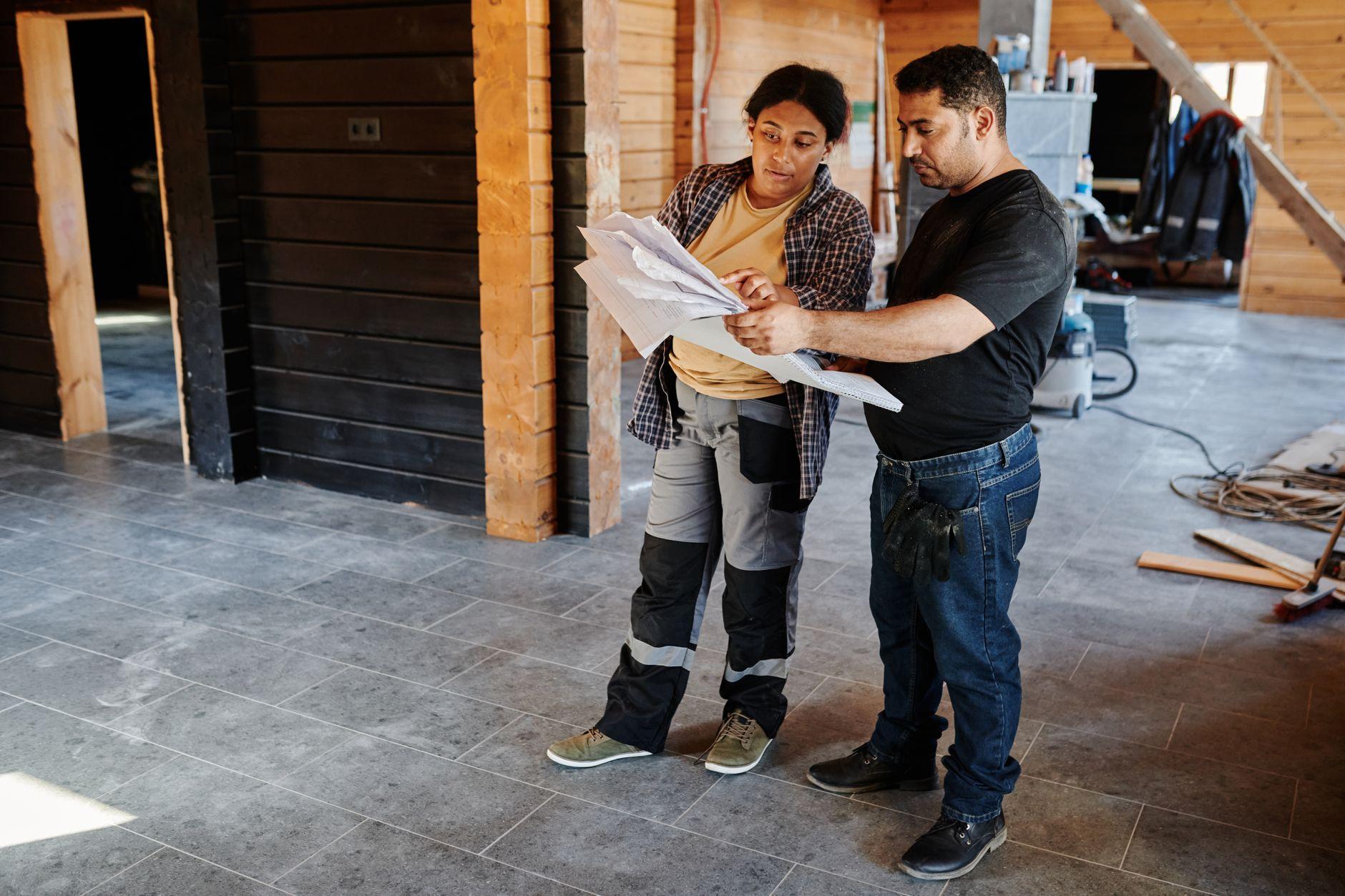
Include captions explaining what's happening and why it matters. "Here we're installing a French drain before the foundation pour — it prevents water intrusion that could cost the homeowner thousands down the line." This positions you as an expert who does things right, not just fast.
Educational Content
Answer the questions your clients ask repeatedly. "How long does a roof replacement take?" "What's the difference between asphalt and metal roofing?" "When should I worry about foundation cracks?" These are the searches your future clients are typing into Google and TikTok.
Create one educational post per week. It establishes authority, answers buyer-intent questions, and gives you content you can repurpose across platforms. A 30-second TikTok explaining signs of foundation problems becomes an Instagram Reel, a LinkedIn text post, and a Facebook update.
Team and Culture Content
Construction is a people business. Clients want to know who will be on their property for weeks or months. Show your team — their expertise, their safety training, their pride in their work. This builds the trust that converts followers into paying clients.
Post about safety milestones, certifications, team members joining or celebrating work anniversaries, and behind-the-scenes moments that humanize your company.
The Posting Framework: How Often and When
Construction companies should aim for 3–4 posts per week across their primary platforms. Here's a framework that works:
| Day | Platform | Content Type |
|---|---|---|
| Monday | Instagram + Facebook | Recent project showcase or before-and-after |
| Wednesday | Project milestone, industry insight, or team highlight | |
| Friday | Instagram + Facebook | Job site process or educational content |
| Bi-weekly | TikTok | Time-lapse, satisfying process video, or quick tip |
This cadence keeps you visible without demanding hours of content creation. The key is batching — film job site content once a week, edit on a quiet evening, and schedule the whole week at once.
The best times to post for construction audiences are early morning (7–8 AM, before the workday starts) and evening (6–7 PM, after work). Lunch-hour posts also perform well for industry content on LinkedIn.
Common Social Media Mistakes Construction Companies Make
Posting only finished projects. Process content gets more engagement than polished final photos. People want to see how you work, not just what you delivered.
Ignoring negative reviews. 86% of consumers read reviews before hiring contractors. A thoughtful, professional response to a negative review signals more about your character than a hundred five-star reviews.
Inconsistent posting. A burst of posts after finishing a project, followed by three months of silence, tells the algorithm (and potential clients) that you're not reliable. Consistency beats volume every time.
No calls to action. Every post should guide the viewer toward a next step — visit your website, book a consultation, save this post for reference. Without a CTA, engagement doesn't convert.
Using personal accounts for business. Your construction work should live on a business profile with proper contact information, service descriptions, and a link to your website. Not your personal Facebook page.
How AI Tools Help Construction Companies Stay Consistent
The number one reason construction companies fail at social media is time. After a 10-hour day on the job site, nobody wants to write captions and edit photos. This is where AI-powered social media tools change the game.
Tools like Picmim can take your job site photos and automatically generate captions optimized for each platform, schedule posts at the best times for engagement, and even suggest content ideas based on your industry. Instead of spending Sunday evening writing Instagram captions, you upload photos once a week and let the AI handle distribution.
For construction companies specifically, AI tools help with:
- Caption writing that includes relevant local keywords ("kitchen renovation in Ljubljana," "roof replacement Postojna")
- Scheduling posts for optimal engagement times without manual effort
- Content ideas based on what's trending in construction and home improvement
- Multi-platform publishing so one upload reaches Instagram, Facebook, and LinkedIn simultaneously
- Performance tracking so you can see which types of projects get the most engagement
The construction companies that will win in 2026 aren't the ones with the biggest ad budgets. They're the ones who consistently show their work, build trust through transparency, and use tools that make posting effortless even during busy project weeks.
Measuring What Matters
Don't get lost in vanity metrics. For construction companies, the metrics that matter are:
- Website clicks from social media — these indicate genuine interest
- Direct messages and inquiries — the strongest leading indicator of new business
- Saved posts — people bookmarking your content for future reference (usually when they're planning a project)
- Follower growth rate — steady growth matters more than total numbers
- Review ratings — your overall rating directly impacts conversion
According to construction marketing benchmarks, social media converts at 15–20% for the industry. That's lower than SEO (35–38%) but far from insignificant when you consider that social media also drives brand awareness, referral traffic, and review generation — all of which feed into your SEO performance.
The most effective approach combines both: SEO-optimized website content that captures high-intent search traffic, supported by active social media that builds trust and keeps you top-of-mind.
Conclusion
Construction is a visual, trust-based industry — which makes it a perfect fit for social media. Your projects are your best marketing asset, and the platforms that work (Instagram, LinkedIn, Facebook) are where your future clients are already spending their time.
Start simple: pick one platform, commit to posting twice a week, and focus on before-and-after content from recent projects. Use scheduling tools to stay consistent during busy weeks, and always include a clear call to action. The companies that show their work consistently are the ones that win the bids.
If you want to make social media effortless, try Picmim — it's built for small businesses that don't have time to mess with captions and posting schedules. Upload your project photos once a week, and let AI handle the rest.
Sources: Siana Marketing Construction ROI Report 2026; CUfinder Construction Marketing Benchmarks 2026; Projectmark; Construction Specifier; BIC Magazine.