On this page
Every small business owner hits the same crossroads sooner or later. You have a limited budget, maybe a few hundred euros a month, and you need to decide: do you spend it on ads, or do you invest time in building an organic presence? It is the kind of decision that keeps business owners up at night, because getting it wrong means wasted money and missed customers.
The stakes are real. Social media influences the purchasing decisions of 67% of consumers, according to Salesforce. Over half of all social media users research products on these platforms before buying. Yet 73% of small business owners are not confident their current marketing strategy is actually working, as Constant Contact reported in their SMB guide. That uncertainty is expensive.
Here is the honest truth that most marketing guides will not tell you: there is no universal answer to the organic versus paid question. What works for a local bakery in Ljubljana will not necessarily work for a B2B software startup in Berlin. The right answer depends on your budget, your timeline, your industry, and frankly, how much time you can personally invest.
But there is a data-backed framework that can help you decide. And that is what this article gives you — not a one-size-fits-all prescription, but a clear breakdown of costs, reach, engagement, and ROI for both approaches, tailored to the realities of running a small business in 2026.
The State of Organic Social Media in 2026
Let us start with the elephant in the room. Organic reach — the number of people who see your posts without you paying for distribution — has been declining for years. And in 2026, the numbers are sobering.
Facebook Page posts now reach an average of just 2 to 5.9% of followers, according to data from Addictive Digital and Social Media Examiner. Back in 2012, that number was 16%. Instagram has not been spared either: the average post reaches about 3.5 to 7.6% of followers, having declined 12% year-over-year, according to Socialinsider. LinkedIn saw an even steeper drop of 34% in organic reach.
Read those numbers again. If you have 1,000 followers on Facebook, roughly 20 to 60 people will see your next post. That is the reality of algorithmic feeds in 2026.
But here is what those numbers do not tell you: the people who do see your organic content trust it more. Nielsen research consistently shows that 92% of consumers trust recommendations from individuals — even strangers — over brand advertisements. Organic content feels authentic. It shows up because the algorithm thinks it is relevant, not because you paid for placement. That trust translates into higher engagement rates: organic posts typically see 1.5 to 4.5% engagement, compared to just 0.5 to 1.8% for paid ads, according to Searchlab's 2026 analysis.
The question is not whether organic social media works. It does. The question is whether you can afford the time it takes to build momentum. Organic social is a long-term play — expect three to twelve months before you see meaningful results. For a time-poor small business owner, that timeline can feel excruciating.
What Organic Social Media Actually Costs
Organic social media is often called "free," but that is misleading. Your cost is time and content production. Here is what that looks like in practice for a small business:
Creating quality content takes real effort. Writing captions, designing graphics, filming short videos, researching hashtags, responding to comments — a single week of organic social media activity can easily consume 8 to 15 hours. If you value your time at what it is actually worth (running your business), that is a significant investment.
This is where AI-powered tools have changed the game for small businesses in 2026. Platforms like Picmim can generate a week's worth of platform-optimized content in minutes, schedule posts at AI-determined optimal times, and even suggest hashtags based on what is trending in your specific niche. What used to take 15 hours now takes two. That shift is what makes organic social media viable for businesses that previously could not spare the time.
The bottom line on organic: the financial cost can be near zero (or the price of a scheduling tool), but the time investment is substantial unless you leverage AI. The payoff is trust, community, and content that keeps working for you long after you post it.
The State of Paid Social Media in 2026
Paid social media is the accelerator pedal. You put money in, and you get reach out — immediately, predictably, and with precise targeting. There is no waiting twelve months for the algorithm to notice you.
The scale of paid social is enormous. Sprout Social's 2026 report found that 87% of marketing leaders expect their paid social spend to increase, and 80% plan to shift budget from other channels into social. Small businesses spend between $500 and $2,500 per month on social media advertising on average, according to LYFE Marketing. That is real money, and it buys something organic cannot: certainty of reach.
When you run a paid campaign, you control exactly who sees your content. You can target by location (people within 10 kilometers of your shop), by demographics (owners of manufacturing companies in Germany), by interests (followers of your competitors), and by behaviors (people who recently moved to a new city). That precision means your content reaches the people most likely to become customers, not just whoever the algorithm decides to show it to.
But paid social has its own challenges. Ad fatigue is real — consumers are bombarded with thousands of ads daily, and engagement rates for paid content are roughly a third of organic rates. Cost per click has been rising across all platforms. And when you stop paying, your reach drops to zero instantly. There is no compound effect, no library of content that keeps getting discovered.
What Paid Social Media Actually Costs
The financial picture for paid social is more straightforward than organic, but the range is wide. Here are the realistic numbers for small businesses in 2026:
A minimum viable ad budget on Meta (Facebook and Instagram) is around €300 to €500 per month. That gets you enough impressions to test different ad creatives and audiences, though you will need to iterate. LinkedIn ads are significantly more expensive — expect €800 to €2,000+ per month for meaningful B2B reach. TikTok ads sit somewhere in between, with strong performance for visual and lifestyle products.
On top of the ad spend itself, you have creative production costs. Even simple ad graphics or short videos require time or money to produce. And if you are running campaigns across multiple platforms, the complexity multiplies.
The key metric to watch is cost per acquisition (CPA) — how much you spend in ad costs to acquire one customer. If your CPA is lower than your customer lifetime value, paid social is profitable. If it is not, you are burning money. For most small businesses, finding the right targeting and creative mix to achieve a profitable CPA takes one to three months of testing.
Head-to-Head: Organic vs Paid by Platform
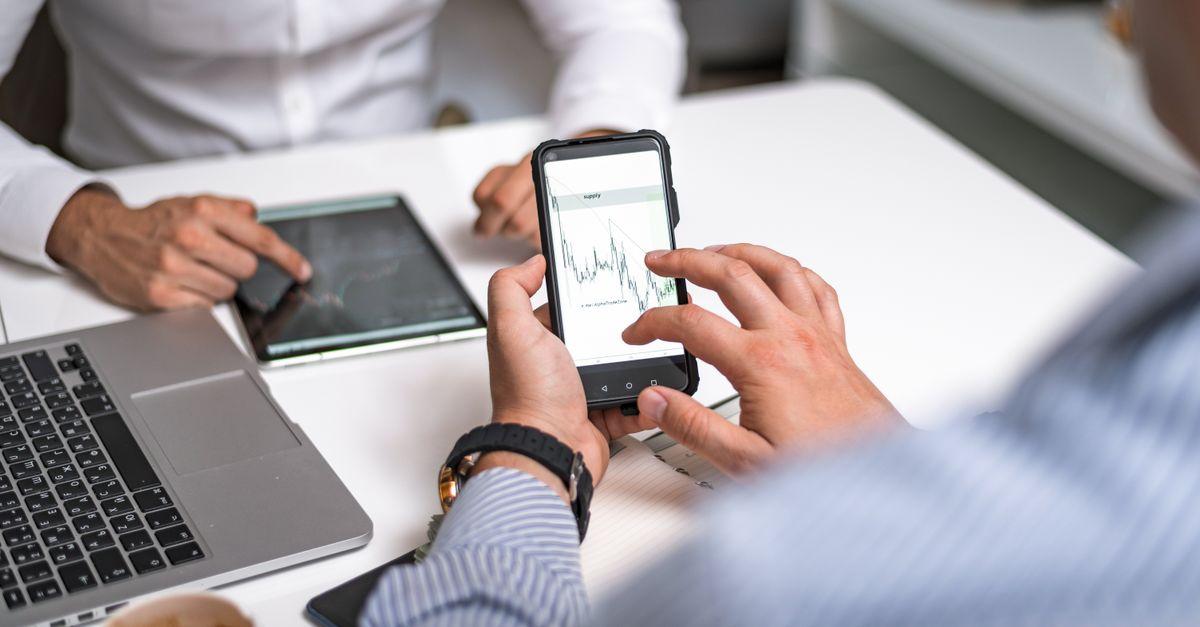
The right choice between organic and paid depends heavily on which platform you are using. Each one has a different balance of organic opportunity and paid effectiveness.
Facebook: Organic reach is among the lowest of any platform (2 to 5.9% of followers). Paid ads on Facebook remain highly effective, especially for local businesses, with sophisticated geo-targeting and reasonable costs per thousand impressions. For most small businesses, a hybrid approach works best — use organic to maintain your page and build social proof, and use paid to actually reach new customers.
Instagram: Organic reach is higher than Facebook (5 to 7.6% per post), and Reels can achieve significantly wider distribution beyond your follower base. Instagram is particularly strong for visual businesses — food, fashion, design, architecture, fitness. Paid Instagram ads benefit from Meta's targeting infrastructure and tend to perform well for e-commerce and local services.
LinkedIn: Organic reach has dropped sharply (34% decline), but the quality of organic engagement remains high for B2B. Decision-makers actively use LinkedIn to discover vendors and partners. Paid LinkedIn ads are expensive but effective for high-value B2B sales where one closed deal justifies months of ad spend.
TikTok: The outlier. TikTok's algorithm is uniquely generous to new accounts with zero followers — a single well-crafted video can reach millions. Average engagement rates of 5.69% dwarf every other platform. Organic TikTok is arguably the best free marketing opportunity available to small businesses today. Paid TikTok ads are growing in effectiveness but are still less mature than Meta's offering.
The Hybrid Strategy: How Smart Small Businesses Win
The most successful small businesses in 2026 do not choose between organic and paid. They use both, in a deliberate ratio that reflects their situation. Here is what that looks like in practice.
Phase 1: Build the foundation organically (months 1 to 3). Before spending a single euro on ads, invest in building a content library. Use an AI tool to generate and schedule posts consistently across your platforms. This accomplishes three things: it gives your brand a presence that paid ads can point to, it teaches you what content resonates with your audience, and it builds a foundation of social proof — reviews, comments, engagement — that makes your future paid campaigns more credible.
Phase 2: Amplify what works with paid (months 3 to 6). Once you know which organic posts get the most engagement, turn them into ads. Your best-performing organic content is your best-performing ad creative — it is already proven. Boost those posts or create formal ad campaigns around them, targeting the audiences most likely to convert. Start with €200 to €300 per month and scale up only the campaigns that deliver a positive return.
Phase 3: Maintain the balance (ongoing). The businesses that get the best ROI maintain a roughly 60/40 split between organic time investment and paid budget. Organic content keeps your existing audience engaged and produces the creative insights that fuel your paid campaigns. Paid content extends your reach to new audiences and drives measurable conversions. Remove either one, and your results suffer.
This hybrid approach works because the two strategies compensate for each other's weaknesses. Organic is slow but builds trust. Paid is fast but expensive. Together, they create a flywheel: organic content feeds paid campaigns, paid campaigns bring new followers who boost organic engagement, and the cycle accelerates.
What About Businesses with Zero Budget?
Not every small business can afford even €300 a month for ads. If you are starting from zero, here is the pragmatic approach that actually works in 2026.
Focus entirely on organic, but be strategic about it. Pick one platform — the one where your customers actually spend time — and commit to posting consistently. Use AI tools to minimize the time cost. A tool like Picmim can generate a month of content in an afternoon, schedule it at optimal times, and adapt the tone to match your brand. That brings the effective time cost down to a few hours per month.
Prioritize video content, especially short-form video. TikTok, Instagram Reels, and YouTube Shorts have the highest organic reach of any content format in 2026. The algorithmic preference for video is overwhelming — video posts receive 2 to 3 times the reach of image or text posts on most platforms.
Engage actively with other accounts in your niche. Comment on posts from complementary businesses. Share user-generated content. Respond to every comment on your posts within 24 hours. These behaviors signal to the algorithm that your account is active and valuable, which boosts your organic reach.
Save paid social for when you have validated your product-market fit and have a budget to scale. Running ads before you know what messaging resonates is a recipe for wasted money. Organic content gives you that validation for free.
Common Mistakes That Kill ROI
Whether you are investing in organic, paid, or both, certain mistakes consistently destroy returns for small businesses.
Treating all platforms the same. Cross-posting identical content to every platform without adapting the format, tone, or hashtags is the most common mistake. Each platform has its own culture, algorithm, and content preferences. What kills it on TikTok flops on LinkedIn. AI tools can automatically adapt your core message for each platform, but the key is recognizing that adaptation is necessary.
Boosting posts without a strategy. That "Boost Post" button on Facebook and Instagram is tempting, but boosting without targeting, without a clear objective, and without tracking results is essentially setting money on fire. Every boosted post should have a specific goal — website clicks, messages, or local reach — and you should measure whether it achieved that goal.
Ignoring analytics. Only 26% of small businesses have a documented social media strategy, according to Social Media Examiner. Businesses with a documented strategy are 313% more likely to report success. If you are not tracking what works and adjusting based on data, you are gambling, not marketing.
Giving up too early on organic. Organic social media takes three to twelve months to show results. Many small businesses quit after six weeks of posting because they do not see immediate traction. The algorithmic learning curve is real — platforms need time to understand who your content is for. Consistency beats intensity every time.
Overspending on ads before testing creative. Before committing significant budget to any paid campaign, test multiple ad creatives with small budgets. Five different graphics at €20 each will tell you far more than one graphic at €100. Only scale the winners.
The Real ROI Numbers
Let us get concrete. What kind of return can a small business realistically expect from organic versus paid social media in 2026?
For organic social media, the ROI is harder to measure directly because the benefits are cumulative — brand awareness, trust, SEO benefits, community. But businesses that maintain consistent organic posting report an average engagement rate of 1.5 to 4.5% per post, and 83% of Instagram users say they discover new products through the platform. The long-term compounding effect of organic content means that each post adds to a growing library that can drive traffic for months or years.
For paid social media, the ROI is more immediately measurable. Small businesses running Meta ads typically see a return of €2 to €4 for every euro spent, though this varies widely by industry. E-commerce businesses tend to see the highest returns, while local service businesses see lower direct ROI but benefit from increased brand awareness and foot traffic.
The highest overall ROI comes from the hybrid approach. Businesses that combine organic content creation with targeted paid amplification consistently outperform those using either strategy alone — typically by 30 to 50% in overall marketing effectiveness, according to Searchlab's analysis.
How AI Changes the Equation
The most significant shift in the organic versus paid debate has been the emergence of AI tools that dramatically reduce the cost of organic content creation. This changes the math.
In 2025, producing a week of quality organic content across three platforms required 10 to 15 hours of work. In 2026, with AI-powered tools, the same output takes 1 to 3 hours. That reduction effectively makes organic social media 5 times cheaper to maintain than it was a year ago, which shifts the optimal organic-to-paid ratio further toward organic for time-constrained businesses.
AI also improves paid social performance. Predictive optimization can identify which audiences and creatives are most likely to convert before you spend heavily. Automated bidding reduces the management overhead. And AI-generated creative variations allow you to test more options at lower cost.
The businesses winning in 2026 are not choosing between organic and paid. They are using AI to make both more efficient, and they are investing the time and money they save into higher-level strategy — understanding their customers, refining their messaging, and building a brand that stands out regardless of whether the touchpoint is an organic post or a paid ad.
Conclusion
The organic versus paid debate has a clear answer for small businesses in 2026: you need both, but the ratio depends on your timeline, budget, and goals. If you need customers this month, paid social is the faster path. If you are building a brand that will generate customers for years, organic is the foundation. And if you want the best possible ROI, you use AI to make both efficient and let them feed each other.
Start with what you can sustain. If that is two hours of organic content per week using an AI tool, start there. If you have budget to test ads, start with €200 per month and scale what works. The worst strategy is indecision — posting sporadically, running ads without tracking, and hoping for results without a plan.
The data is clear: 88% of small businesses that increased their marketing investment in 2025 saw stable or improved revenue. Social media works. The question is not whether to invest, but how to invest wisely. Pick your approach, commit to it for at least 90 days, measure everything, and adjust based on what the numbers tell you.
Ready to put this into practice? Try Picmim free and see how AI can handle your organic content while you focus on running your business.
Sources: Sprout Social 2026, Social Media Examiner 2025, Searchlab 2026, Nielsen, Salesforce, Constant Contact SMB Guide, LYFE Marketing, Socialinsider, HubSpot State of Marketing 2026, DataReportal 2026