On this page
If you run a gym, a yoga studio, or a personal training business, you already know the hardest part isn't the workout — it's getting people through the door. And keeping them there.
Nearly 50% of new gym members quit within the first six months. That churn rate eats directly into your revenue. But here's what the data tells us: gyms that actively engage members on social media see 15–20% higher retention rates at the 90-day mark compared to those that don't. Members who interact with their gym's social accounts at least weekly churn at 30% lower rates than passive followers.
Social media isn't just marketing for fitness businesses — it's a retention tool, a community builder, and increasingly, the primary way new members find you. According to Forbes, 44% of people turn to social media for health and fitness advice. When someone in your neighborhood searches "gym near me" or "yoga studio," your social media presence often determines whether they walk in or scroll past.
This guide breaks down exactly how small gyms, studios, and independent trainers can build a social media presence that fills classes, signs new members, and keeps existing ones engaged — without spending hours every day on content.
Why Social Media Matters More for Gyms Than Most Businesses
Fitness is visual, emotional, and community-driven. Three things that social media happens to be built for.
Think about what sells a gym membership. It's not the equipment list — every gym has squat racks and treadmills. What sells is the feeling of belonging, the proof that real people get real results, and the energy of a community that pushes each other. That's why 57% of active fitness consumers say social connection is the main reason they join a fitness community, according to ABC Fitness's 2025 report.
Millennials and Gen Z together account for 65% of all gym members. These are demographics that live on Instagram and TikTok. If your gym doesn't have a presence there, you're invisible to the majority of your potential market. Among adults aged 18–29 — the prime fitness audience — 76% use Instagram and 55% are on TikTok.
The opportunity is straightforward: show up where your future members already are, give them content that makes them want to be part of your community, and make it easy for them to take the next step.
Which Platforms Actually Work for Fitness Businesses
You don't need to be everywhere. Most successful small gyms focus on two or three platforms. Here's how to choose.
Instagram: Your Primary Channel
Instagram is non-negotiable for fitness businesses. The visual format is perfect for showing transformations, class highlights, equipment, and the energy of your space. Reels are your discovery engine — short workout demos, quick tips, and behind-the-scenes clips can reach people who don't follow you yet.
Your Instagram strategy should split into three layers. Feed posts for polished content — high-quality photos of your space, member spotlights, and announcements. Reels for reach — quick workout tutorials, form corrections, and trending audio clips. Stories for daily engagement — class schedules, last-minute openings, member check-ins, and casual behind-the-scenes moments.
TikTok: Reach Younger Audiences
If your target demographic skews under 30, TikTok is where they discover new businesses. The algorithm doesn't care how many followers you have — it cares about whether your video holds attention in the first three seconds. Quick workout snippets, gym culture content, and member transformation stories perform consistently well.
You don't need a separate content strategy for TikTok. Most gyms repurpose their Instagram Reels directly. The key is to post consistently — three to five times per week minimum — and to hook viewers immediately with movement, text overlays, or a surprising statement.
Facebook: Community and Local Reach
Facebook still matters for fitness businesses, particularly for reaching members aged 35 and above. Facebook Groups are powerful for building community around your gym — members share progress, ask questions, and motivate each other. Events let you promote workshops, challenges, and open days.
Facebook's local advertising is also the most precise targeting available. You can show ads to people within a 5-kilometer radius who have expressed interest in fitness, weight loss, or specific workout styles. For small gyms competing with big chains, that kind of targeting levels the playing field.
YouTube: Long-Form Instructional Content
YouTube is a slower burn but pays off in search traffic. Full workout videos, equipment tutorials, and "day in the life" content give potential members a taste of what training at your gym feels like. YouTube content also ranks on Google, so it captures people searching for specific fitness topics in your area.
Content That Actually Drives Sign-Ups
Not all content is created equal. After analyzing what works across hundreds of fitness business accounts, five content types consistently outperform the rest.
1. Member Transformations and Success Stories
Nothing sells a gym membership like proof that it works. Feature one or two members each month with their story — where they started, what they've achieved, and what they love about your gym. Always get written permission, and focus on the journey rather than just before-and-after photos.
Transformation content works because it's authentic. It shows real people, not models. It answers the question every prospect has: "Can this work for me?"
2. Quick Workout Tutorials and Form Tips
Short instructional videos are your highest-reach content format. A 15-second Reel showing how to properly deadlift, or a quick tip on improving push-up form, gets saved and shared at rates that promotional content never matches.
These videos position your gym as a source of expertise, not just a place with equipment. When someone watches five of your form-correction videos and then sees a trial membership offer, the decision feels easy.
3. Behind-the-Scenes and Gym Culture
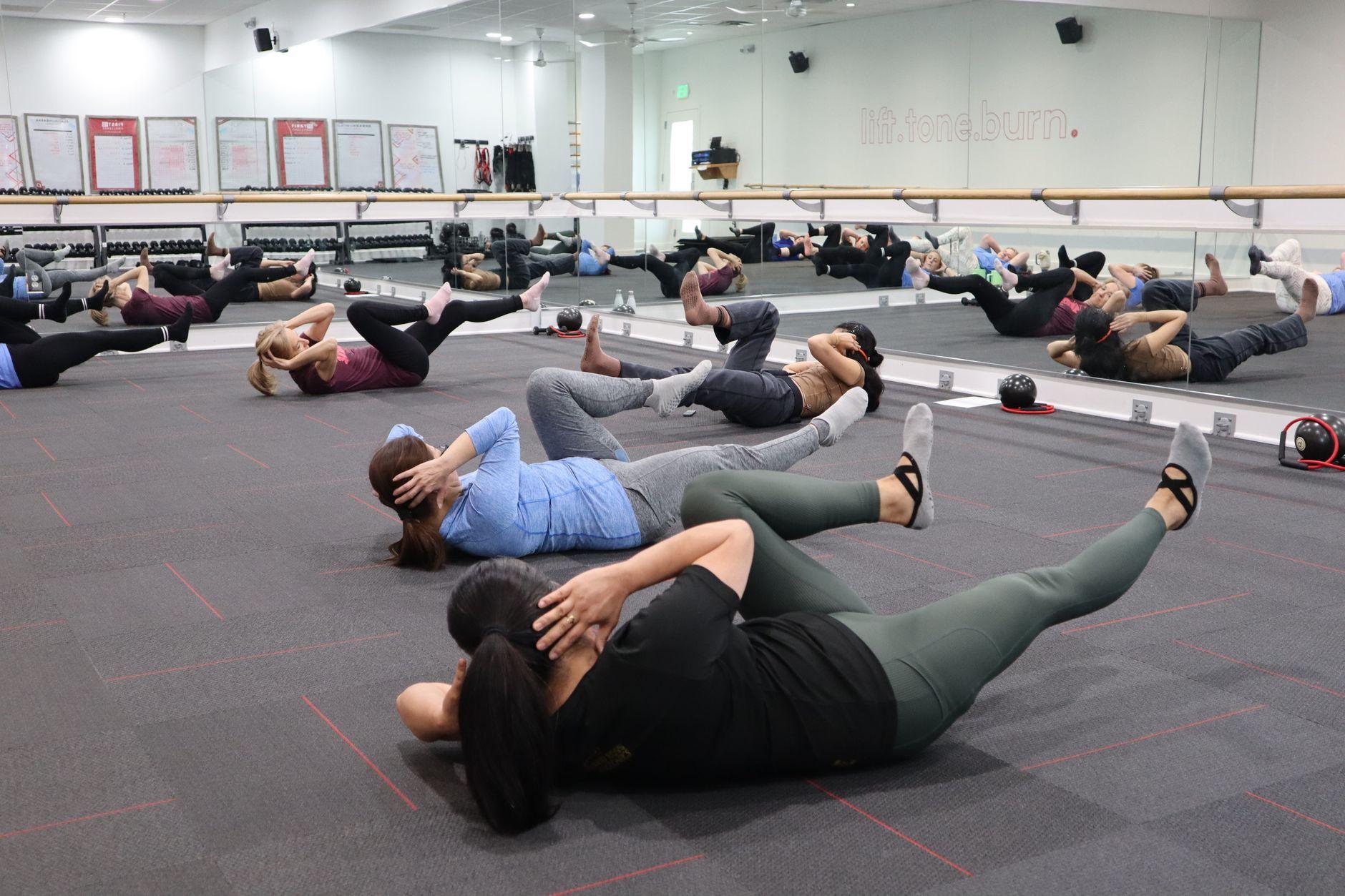
People want to know what it feels like to train at your gym before they commit. Show the atmosphere — the energy of a packed class, the banter between trainers and members, the small details that make your space unique.
This content doesn't need to be polished. In fact, raw and authentic performs better. A quick Story showing the 6 AM crowd grinding, or a Reel of your trainers messing around between sessions, builds more connection than a staged photoshoot ever could.
4. Class Schedules and Challenges
Use Stories and posts to keep members informed about what's happening this week. Promote challenges — "30-Day Plank Challenge," "January Transformation Sprint" — that create urgency and give people a reason to engage both in-person and online.
Challenges also generate organic content. Members post their progress, tag your gym, and spread your reach to their networks.
5. Educational Content on Recovery, Nutrition, and Wellness
Your members' fitness journey extends beyond the gym floor. Content about mobility work, meal prep, sleep, and recovery adds value and positions your gym as a holistic wellness partner rather than just a room with weights.
This type of content also broadens your keyword reach. Someone searching "best stretches for lower back pain" might discover your gym through a Reel — and become a member.

How AI Helps Gyms Post Consistently Without Hiring a Marketer
The biggest barrier to social media success for small gym owners isn't strategy — it's time. Between managing memberships, maintaining equipment, training clients, and handling admin, most gym owners have maybe 30 minutes a week for marketing.
This is where AI-powered social media tools have changed the game. Instead of staring at a blank screen wondering what to post, you can use tools like Picmim to generate a week of fitness content in about 20 minutes. Here's how that looks in practice.
Content generation. Describe your gym — " boutique strength studio in Ljubljana, focus on small-group training, friendly atmosphere" — and AI generates post ideas, captions, and hashtags tailored to your audience. You review and approve. No copywriting required.
Smart scheduling. AI analyzes when your audience is most active and schedules posts for those windows automatically. For fitness businesses, this typically means early morning (6–8 AM), lunch hour (12–1 PM), and evening (5–7 PM) — when people are either about to train or thinking about it.
Multi-platform publishing. One piece of content adapts automatically for Instagram Reels, TikTok, Facebook posts, and Stories. Instead of creating separate assets for each platform, you create once and distribute everywhere.
Performance tracking. Instead of digging through analytics dashboards, you get a weekly summary of what's working — which posts drove profile visits, which Reels got the most reach, which content led to membership inquiries.
The result is a social media presence that feels active and professional, maintained in the margins of a busy gym owner's schedule.
Common Mistakes That Hurt Gym Social Media
Posting Only Promotional Content
If every post is "Sign up now!" or "Special offer!" your audience will tune out. The 80/20 rule applies: 80% of your content should educate, entertain, or inspire. Only 20% should directly promote your business.
Inconsistent Posting
Posting five times in one week and then going silent for three weeks confuses both your audience and the algorithm. Consistency beats volume. Three posts per week, every week, outperforms fifteen posts in a burst followed by silence.
Ignoring Member-Generated Content
Your members are creating content in your gym every day — selfies, workout videos, progress updates. Encourage them to tag your gym, then reshare their content. It's authentic, it's social proof, and it's free content you didn't have to create.
No Clear Call to Action
Every post should make the next step obvious. "Book a free trial," "DM us for class times," "Link in bio for membership info." Don't assume people will figure it out — tell them exactly what to do.
Using Low-Quality Visuals
Fitness is a visual industry. Dark, blurry gym photos don't sell memberships. You don't need a professional photographer, but you do need decent lighting, clean composition, and the native resolution each platform recommends. Most modern smartphones are more than capable.
Building a Realistic Content Workflow
Here's a practical weekly workflow that takes roughly two hours total and keeps your gym's social media active and effective.
Monday (30 minutes): Plan the week's content. Choose five posts — two educational (form tips, workout demos), one member spotlight, one behind-the-scenes, and one promotional. Batch-create captions using AI, then schedule everything.
Wednesday (15 minutes): Check engagement on Monday and Tuesday posts. Reply to comments and DMs. Capture any organic moments during the day — a busy class, a member hitting a milestone — for Stories.
Friday (15 minutes): Review the week's performance. Note which posts performed best. Plan any weekend content — typically lighter, more community-focused posts.
Throughout the week (ongoing): Members tag you in their content. Reshare the best ones to your Stories. This takes seconds and builds massive goodwill.
With AI tools handling the heavy lifting of caption writing and scheduling, even this two-hour weekly investment can shrink to under an hour — making professional social media management accessible to even the smallest studios.
Measuring What Actually Matters
Don't get distracted by vanity metrics. For a gym or fitness studio, the metrics that matter are:
Profile visits and website clicks. These indicate people are interested enough to learn more. Track these monthly and watch for growth.
Membership inquiries from social. The ultimate metric. Ask every new trial member how they found you. If social media isn't one of the top answers, something needs adjusting.
Story views and engagement rate. Stories show daily active interest. If your Story views are growing, your community is engaged.
Saves and shares on Reels. When someone saves your workout tutorial or shares it with a friend, that's high-intent engagement. These actions signal that your content provides real value.
Follower count matters less than you think. A gym with 800 local, engaged followers will outperform a gym with 8,000 random followers every time.
Conclusion
Social media for gyms isn't complicated, but it does require consistency. The formula is proven: show your community, share your expertise, make it easy to join, and keep showing up. The gyms that do this well see measurable improvements in both acquisition and retention — not because they went viral, but because they built a presence that makes people want to be part of what they're doing.
If you're spending more time worrying about what to post than actually posting, AI tools like Picmim can handle the heavy lifting. Generate a month of fitness-specific content in an afternoon, schedule it across Instagram, Facebook, and TikTok, and get back to what you do best — coaching your members.
Ready to put your gym's social media on autopilot? Try Picmim free and see how much time you save.
Sources: Forbes, ABC Fitness Fall 2025 Report, CuFinder Retention Data, Statista Digital Health Market Outlook, Pew Research Center, PerfectGym Fitness Industry Statistics.