On this page
If you own a gym or fitness studio, you already know the problem. You post on Instagram. You upload Reels. You keep your Stories updated. And yet, when someone asks how many new members came from social media last month, the honest answer is uncomfortable.
You are not alone. An analysis of 30 gym accounts across platforms found a consistent pattern: high engagement, near-zero membership attribution. Likes go up. Trial sign-ups do not. The content looks good. The business results do not.
The global fitness industry is worth $96.7 billion, with over 184 million gym memberships worldwide. But here is the number that should keep you up at night: 50% of new members quit within six months, and 67% rarely use their memberships. Retention is the real battle, and social media is one of your best weapons for fighting it — but only if you stop treating it as a broadcasting tool and start treating it as a conversion system.
This guide breaks down exactly how gyms and fitness studios can use social media to fill classes, sign up new members, and keep existing ones engaged. No fluff. No vanity metrics. Just the platform-by-platform playbook that turns followers into members.
The Problem: Why Most Gym Social Media Fails
Most gym social media accounts share the same structural problem. They post for members, not prospects.
Member shoutouts, "great class this morning" posts, and inside jokes generate warm responses from the existing community. They feel good. But they do nothing for the person scrolling who has never set foot in your gym and is deciding whether to book a trial. If your content only makes sense to people who already know your facility, you are not acquiring anyone new.
The second failure mode is even more common: no conversion mechanism anywhere in the content. A post without a booking link, a DM prompt, or a trial offer has no path to membership. Engagement stays as engagement. Two-Brain Business, which has worked with thousands of gym owners globally, puts it plainly: "Posting value content without a weekly conversion post is brand awareness, not lead generation, and brand awareness alone does not fill classes."
The fix requires two structural changes. First, every piece of content should pass a single test: would a non-member watching this have a reason to act? Second, at least one post per week should explicitly ask for the business — a free trial offer, a DM prompt, or a link to book a first class.
Which Platforms Actually Matter for Gyms
The most common mistake gym owners make is trying to maintain a presence on every platform simultaneously. Content burnout sets in within weeks. Instead, start with two platforms, build a working system, and add a third only when the first two run without effort.
Each platform has a specific job in the membership funnel. Understanding this prevents you from wasting time on platforms that do not drive sign-ups.
Instagram is the primary discovery and social proof platform for gyms. Before a prospect books a trial, they almost always check your Instagram. What they find in the first six seconds determines whether they take the next step. Reels are your front door to non-members — the algorithm shows them to people who do not follow you but have interest and location signals matching your gym. For a local studio, a well-executed 30-second Reel can reach thousands of people in your area who have never heard of you.
Facebook remains critical for community retention and local advertising, especially if your membership skews over 35. Facebook Groups built around your gym community keep members engaged between visits, and local ad targeting lets you reach people within a 5-kilometer radius with trial offers.
TikTok delivers organic reach to non-followers better than any other platform, particularly for the under-35 audience. If you can commit to three or more short videos per week, the algorithm rewards consistency. Fitness content is one of TikTok's highest-performing categories — fitness-related content has accumulated over 300 billion views on the platform.
Google Business Profile is not social media in the traditional sense, but it is the first thing prospects find when they search "gym near me." A complete, regularly updated profile with recent reviews drives Google Maps placement and builds trust before a prospect ever visits your social accounts. Set this up before you post anything else.
The Content That Actually Converts
Not all content is created equal. The gyms that convert followers into members consistently post four types of content, each serving a different stage of the membership funnel.
Type 1: Social Proof Content (40% of your posts)
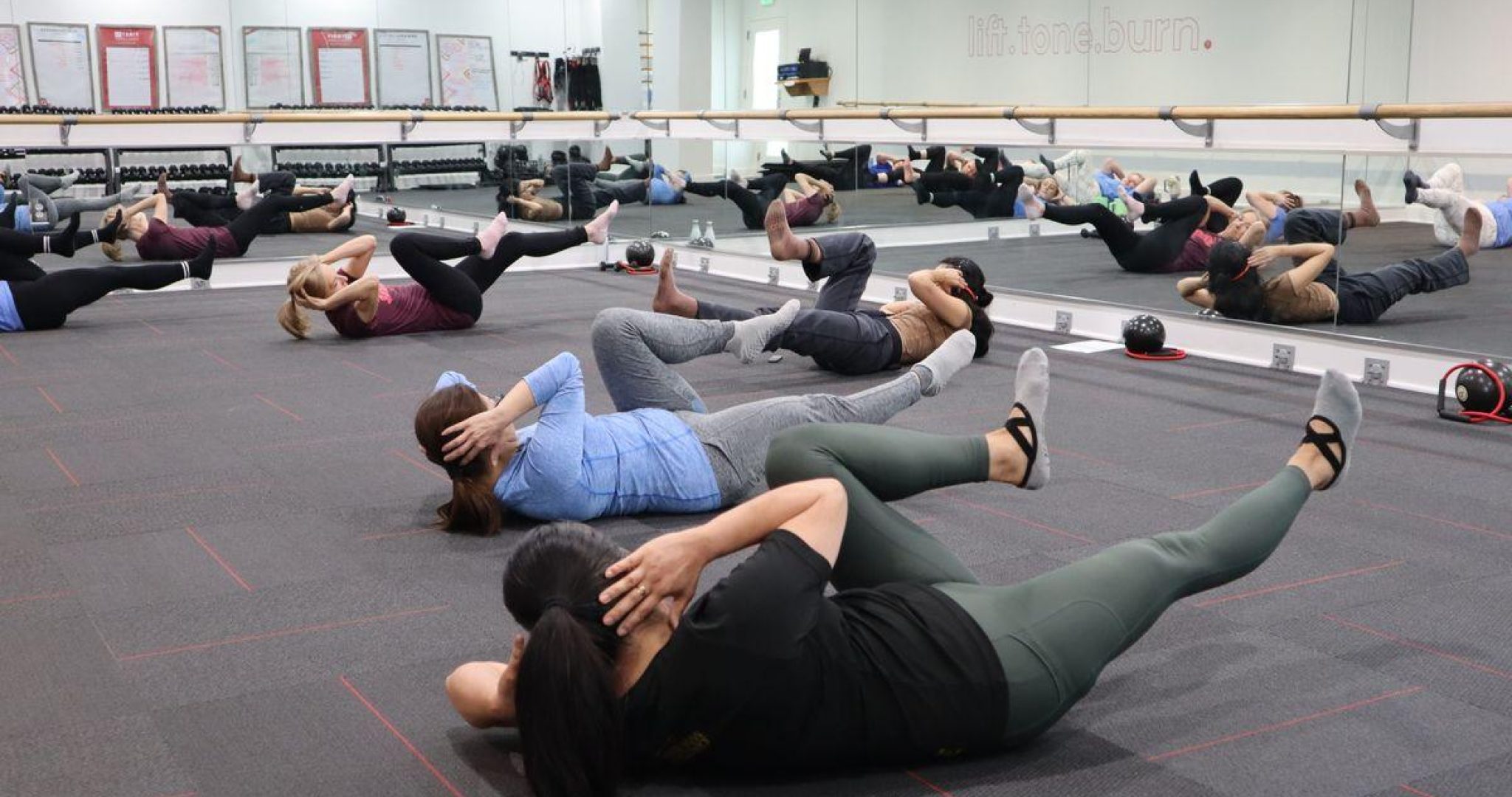
This is what replaces a prospect's doubt with confidence. Real members working out. Before-and-after transformations. Class footage that shows the energy of your facility. Testimonials filmed on a phone — not polished, just authentic. A prospect watching a Reel of a class in motion should think, "I want to be in that room."
The key is authenticity over production value. Barry's, the global fitness brand, built its class-booking culture largely on high-energy short-form video that communicates intensity and community without narration. Their Reels show real members working hard, real trainers coaching. The production is clean but not overproduced, and the energy sells itself.
For a local gym, the formula is simpler: film one class from three angles in 30 seconds, add music that matches your gym's energy, and end on a CTA frame with your booking link.
Type 2: Educational Content (25% of your posts)
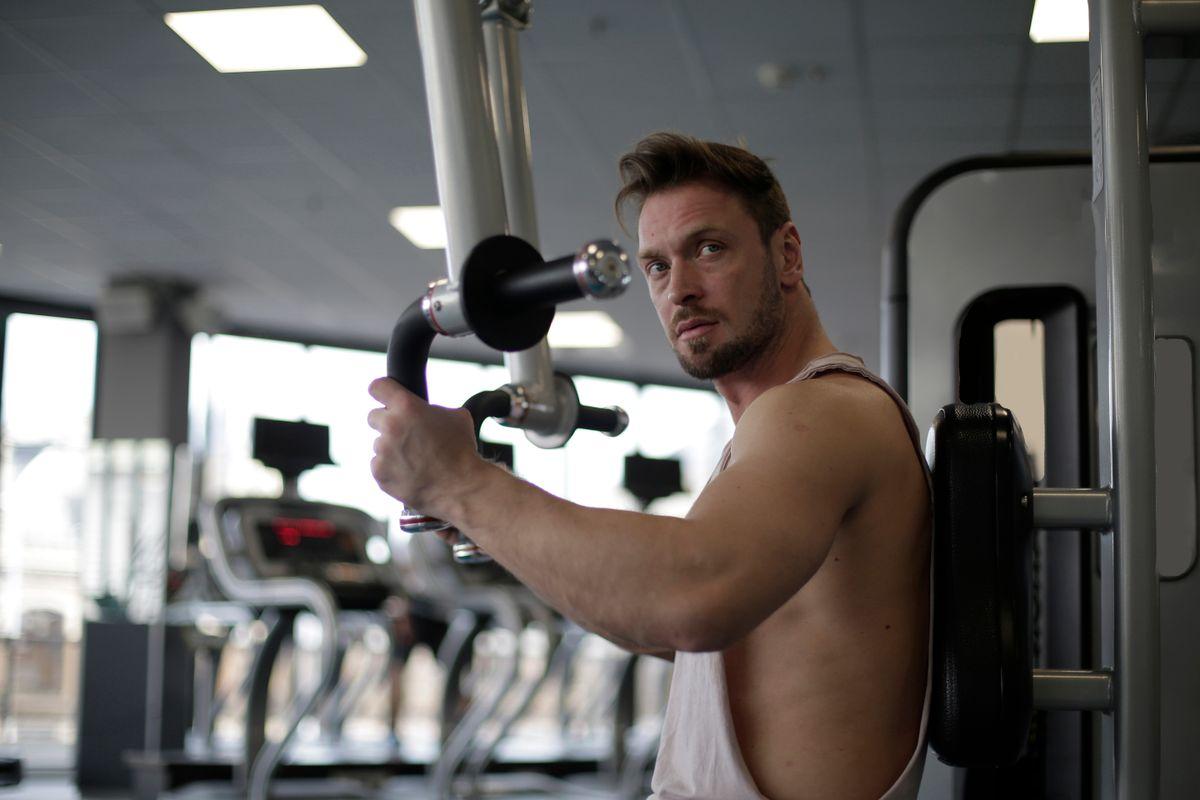
Position your trainers as experts. Quick form tips, common mistakes, mobility drills, nutrition basics — content that helps people whether or not they are members. This builds trust and authority. When someone finally decides to join a gym, yours is the one they think of.
Keep these short and specific. "Three mistakes you are making on your squat" outperforms "Everything you need to know about leg day" every time. Specificity signals expertise. Generality signals a content farm.
Type 3: Community Content (20% of your posts)
This is retention fuel. Member spotlights, challenge updates, gym milestones, behind-the-scenes moments. Community content keeps existing members engaged and demonstrates to prospects that your gym is a place where people belong, not just a room with equipment.
57% of active fitness consumers say social connection is why they join. Nearly half of Gen Z say it is why they stay. If your social media does not communicate community, you are competing on price — and that is a race to the bottom.
Type 4: Conversion Content (15% of your posts)
This is the content that asks for the business. Free trial offers, first-class-free promotions, limited-time membership discounts, direct booking links. At least one post per week should be explicitly conversion-focused.
The CTA matters more than the content. "Book your free trial" with a link converts. "Come say hi" with no link does not. Make the action obvious, make it easy, and make the landing page fast. If your booking page takes more than three taps from the Instagram profile, you are losing people.
How Often Should Gyms Post?
Consistency beats volume. A gym that posts three times per week with a clear strategy will outperform one that posts daily with no plan.
A practical weekly cadence for a gym or fitness studio:
- 3 Instagram Reels per week (2 social proof, 1 educational)
- 5-7 Stories per week (community content, class schedules, daily updates)
- 1 conversion post per week (trial offer, booking link)
- 2-3 Facebook posts per week (community, events, ads)
- 1 Google Business Profile update per week (photos, hours, special events)
If you can sustain this for 90 days, you will see a measurable difference in trial sign-ups. Not because of a secret algorithm hack, but because you have built a system where every piece of content has a job.
The Retention Play: Keeping Members Through Social Media
Acquisition gets all the attention, but retention is where money is made. The average gym loses 50% of new members within six months. Social media is one of the most effective retention tools available — if you use it correctly.
Members who feel connected to your gym community are more likely to stay. Social media reinforces that connection between visits. A member who sees themselves tagged in a class photo, or whose progress is celebrated in a Story, feels seen. That feeling of recognition is what keeps them coming back.
Here is what works:
Tag members in class photos and Stories (with permission). Create a members-only Facebook Group for schedule updates, challenges, and community discussion. Run monthly challenges with social media checkpoints — members post their progress, tag the gym, and get featured. Celebrate milestones publicly: 100th class, first pull-up, six months of membership.
These seem small. They are not. In an industry where 67% of members stop using their membership, the gym that makes members feel like they belong is the gym that keeps them.

How AI Can Help Gyms Manage Social Media
If you are a gym owner, you are already wearing too many hats. Trainer, manager, cleaner, marketer. Social media often falls to the bottom of the list because it feels like a time sink with unclear returns.
AI-powered social media tools change this equation. Instead of spending hours planning content, writing captions, and figuring out when to post, you can automate the repetitive work and focus on the creative side — filming class footage, capturing member moments, and building community.
Tools like Picmim can generate a month of platform-specific content from a few photos and a description of your gym. AI scheduling ensures your posts go live when your audience is most active. AI caption generation handles the writing so you can focus on filming. And analytics dashboards show you which posts actually drive trial sign-ups, not just which ones get likes.
The gyms that will win in 2026 are not the ones with the biggest social media teams. They are the ones that use AI to punch above their weight — maintaining a consistent, strategic presence without sacrificing the time they need to run their facility.
Measuring What Matters
Stop tracking likes. Start tracking these metrics instead:
Trial sign-ups per month. This is the only metric that directly ties social media to revenue. If your social media is working, this number goes up. Track where each trial comes from — Instagram bio link, Facebook ad, Google Business Profile — so you know which platform to invest more time in.
Story completion rate. If people watch your Stories to the end, your content is holding attention. If they drop off after the first frame, your opening hook needs work.
Reel reach (non-followers). This tells you how many people who do not follow you are seeing your content. It is the best indicator of whether your content is reaching new prospects or just echoing to existing members.
DM inquiry rate. How many people message you per week asking about membership, class times, or trials? This is a leading indicator of trial sign-ups.
Member retention correlation. Do members who follow your social media stay longer than those who do not? If yes, your social media is doing retention work. If the data shows no difference, your content is not building connection.
Common Mistakes to Avoid
Posting only when you feel inspired. Social media rewards consistency, not inspiration. A content calendar — even a simple one — beats sporadic bursts of creativity. Plan a month ahead, film everything in one session, and schedule it.
Using hashtags instead of location tags. For local gyms, location tags are more valuable than any hashtag. Tag your city, your neighborhood, your street. When someone searches Instagram for fitness content in your area, your posts should appear.
Ignoring negative comments. If someone posts that your gym is too crowded or too expensive, respond publicly and professionally. Prospects read how you handle criticism. A thoughtful response to a complaint builds more trust than a dozen glowing testimonials.
Treating every platform the same. Instagram content should not be copy-pasted to Facebook. Each platform has different formatting, different audience expectations, and different algorithm preferences. Customize your content for each platform, even if the core message is the same.
Never asking for the business. If you go a full week without a single post that includes a booking link or trial offer, your social media is not a marketing channel — it is a hobby. Conversion content is not pushy. It is helpful. The person who wants to try your gym needs to know how.
Conclusion
Social media for gyms and fitness studios is not about going viral. It is about building a system that consistently turns strangers into prospects, prospects into trial members, and trial members into long-term community members.
Start with two platforms. Post four types of content. Ask for the business every week. Measure trial sign-ups, not likes. And use AI tools to handle the repetitive work so you can focus on what matters — running your gym and serving your members.
The gyms that figure this out in 2026 will not just have better social media. They will have fuller classes, longer member retention, and a stronger business.
If you want to see how AI can help your gym maintain a consistent social media presence without hiring an agency, try Picmim free. Built for small businesses that need content velocity without the agency price tag.
Sources: Wod.guru Gym Membership Statistics 2026; SocialPilot Social Media for Gyms Guide 2026; Glofox Gym Membership Statistics 2026; Two-Brain Business; Dash Social Fitness Industry Instagram Data 2025